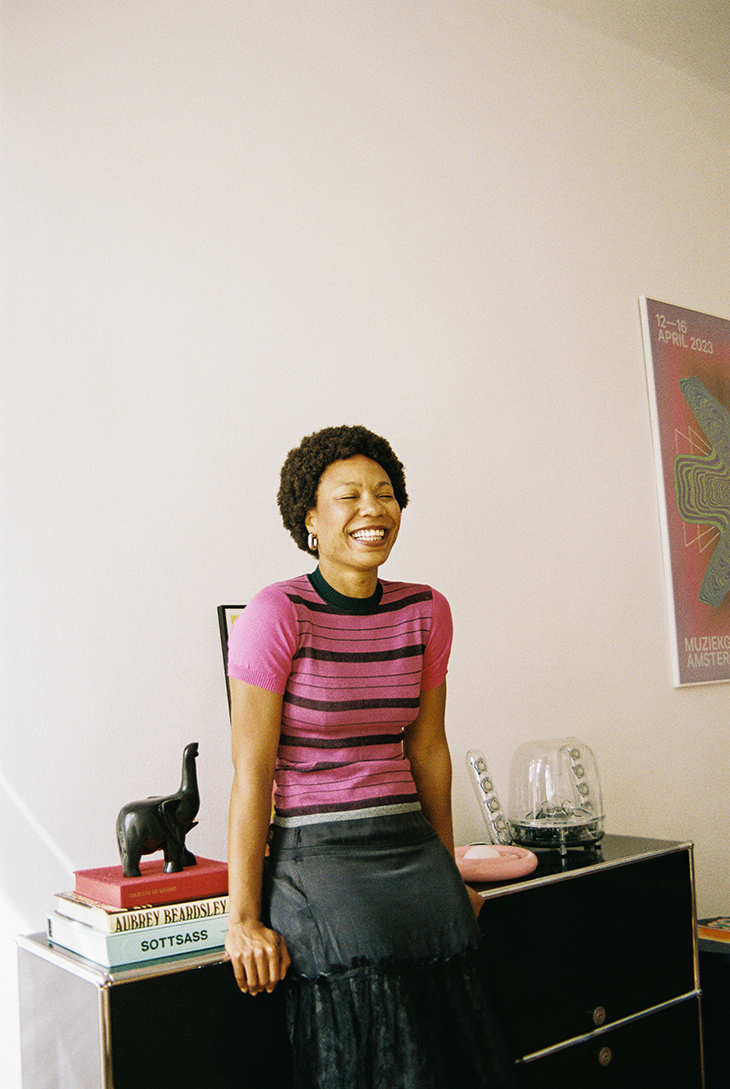
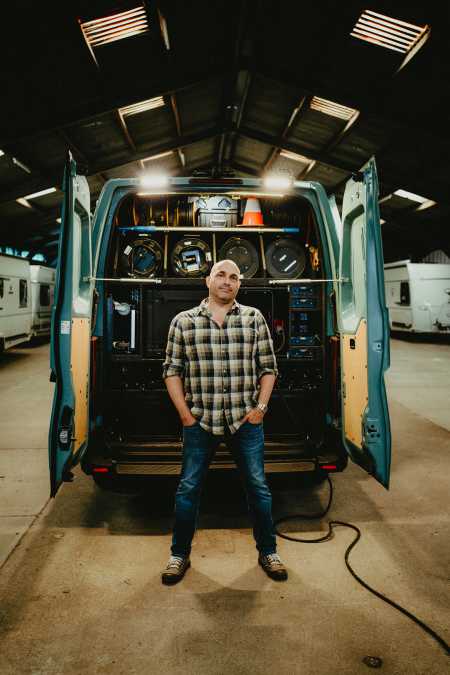
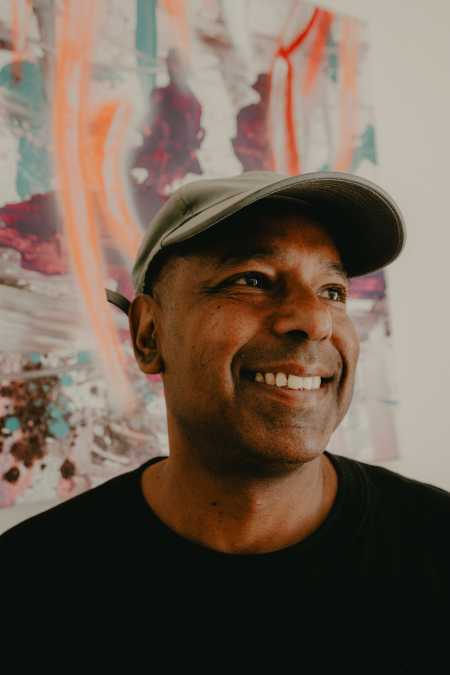
The vibrant force behind Le Guess Who?'s visual identity of 2025 & 2026 is none other than Sophie Douala, an artist, designer and creative director whose signature trademark is an almost palpable command of color, and a refined use of pattern that is at once playful and sophisticated. Born in Cameroon, raised in France and now based in Berlin, Sophie brings a broad and multi-faceted approach to her work, combining a sharp visual aesthetic sense with a soft emotional awareness that unsurprisingly places her in high demand for collaborations.
From a background in graphic design, she has had museum shows with both Stedelijk Museum and OSCAM in Amsterdam, De Singel in Antwerp and Volkskundemuseum Vienna, and appeared in the 2023 International Typography Biennale in Seoul. She has published books and album artwork, created wall concepts for exhibitions, made numerous public speaking engagements across Europe and the UK and also hosts workshops in risograph printing.
For the occasion of our 20th anniversary, we’re highlighting collaborators whose work makes what we do visible, audible and legible to the rest of the world year after year. Behind the Scenes is a series of one-on-one talks with people who have been involved with the festival for quite some time. Their contribution extends beyond one show or one edition, they are essential to sharing what we’ve created here, and we are thrilled to have the chance to celebrate them and the years of appreciation between us.
Interview by Margaret Munchheimer
Photography by Joanna Catherine Schröder
For our first Behind the Scenes interview, we sit down with Sophie Douala to hear more about her personal artistic philosophy, her perspective on the collaboration with LGW so far, as well as what makes a good collaboration in general, and her thoughts on image and art making in the digital age.
Sophie, I'm curious what it's like to try to create a visual identity for someone else—what does that research process look like, and what factors go into the direction you take?
So, maybe the first thing I can say is that I find myself at a really interesting point of my journey where I feel really connected to all of my collaborators. I think it's also part of decisions that I took earlier on; starting with having a side job for money, and then taking on inquiries that I was really interested in. Or, at least, trying to reach out to those kinds of inquiries in music—flyers for parties or collaborations with friends in topics that interested me. So I think by doing so I created a bit of the client base that I enjoy working with.
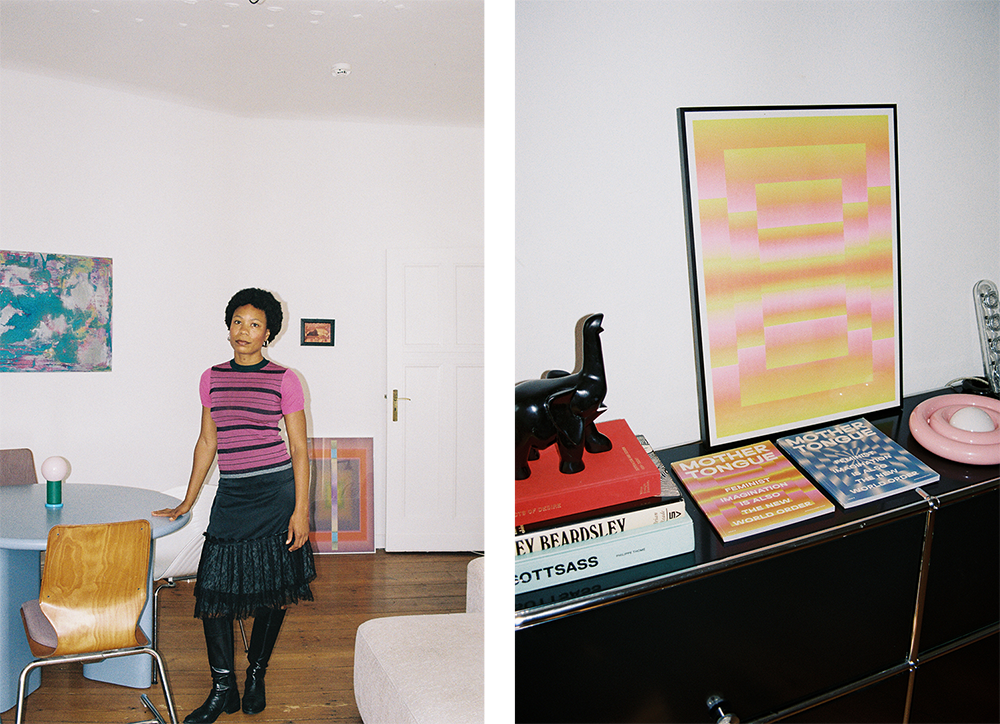
I think the process is obviously trying to, first of all, understand what the collaborator’s aiming to do without my direct involvement: what are they trying to build and for what reasons, what have they been doing in the past—a genuine conversation about their goals and their background. Then I try to conceptualize the thoughts into something tangible.
When I think about these ideas of layering—maybe peeling through the layers and kind of celebrating these accumulations—it's already becoming a concept that I can develop visually: different kinds of patterns on top of each other, or maybe mixed with each other, but I see it more in depth.
Last year was my first year working with LGW. The way that the festival was presented to me, and the way that I experienced it for the first time as well—was more than one layer of different genres and artists put together. You can go see a rock concert, and then you have drum and bass, and then you have beautiful jazz; this sort of complexity and singularity of different entities put together. Visually, I almost saw it as a tapestry. I saw it as an ecosystem.
I'd love to hear more about how you experienced your first time at LGW.
So the first time I went there, it was as a designer. We’d just started talking about collaborating, so they invited me, I guess two years ago.
Really, the first time was amazing. I've been to a couple of music festivals, but I felt like this was different. Because often I go to festivals for the music, but …I think it's festive in a different way… How can I say this? It felt to me like LGW was a bit of a mature festival. Like you go there, you really listen, you go to concerts, sometimes you sit down, there's different kinds of venues—I love that. It's not just, like a techno or house festival, which I also love for other reasons. Although I did go to see one dub artist, [King Jammy], coming all the way from Jamaica, playing reggae dub. That was a party, that was amazing!
But even when I was at that concert, this person—I think he was about 80 years old—had come all the way from Jamaica, and you hear those sounds in all of the DJ sets that you're going to see, you know, across Europe and beyond, you hear those sounds—and then there’s the person who kind of started to bring awareness and created those sounds… It was really magical.
So I think my first experience at LGW, I really was blown away by the curation. And I felt really inspired, of course, to be part of it. I was inspired to think how my work is going to be implemented in such a setting.
Also, I saw a very cute couple, and they wore matching T-shirts. I went to them, and I told them, "Oh, I just wanted to say, I designed it, and you look so good in this! They said, "Oh, we couldn't decide, we both wanted to wear it. We love it!”
It's really nice to be able to interact with the work that way, because then we also go from the digital into a more physical space where the work really comes to life through interaction. That felt really good.
Sophie goes on to describe her unique position working in digital art in this particular era: she was born in 1990 and has witnessed the wonder of a string of ‘firsts’ in personal technology—the Minitel, the Big Mac Macintosh, Mp3’s, mobile phones, etc. She muses how the striking design and user enthusiasm for these products likely led to her fascination with digital work, influencing her choice at art school, to switch her initial focus on fashion to graphic design.
We discuss the pros and cons of platforms like Instagram allowing for direct contact between clients and artists with agencies in between disappearing almost entirely. Artists are finding more autonomy in their work; while in turn, the explosion of visibility results in a sort of oversaturation of the market which can also be exhausting and overwhelming for the self-employed artist. I ask about how she navigates this, and if she finds a renewed interest in creating physical objects as a sort of antidote to this digital saturation.
I think more and more, for sure. I guess as I'm growing in general, and maybe also with the way that the digital era is unfolding—and I’m not even bringing AI into the conversation, but in general—we are very confronted with visuals, you know, online graphic design is very, very present. And sometimes I feel like when I'm working on something tangible—for example, working on my first book—there is this physical thing, and then I see it traveling to many countries. I see people holding it and browsing through it, and I'm thinking of how those things get really archived in such a beautiful way. It's something that you will be able to keep, or to gift, or to pass on. I really love to think about the energy that's also in this physical object. I think there is even more of me in it because I was also present when it was produced; that has something very special.
For a long time, like when I was a little bit younger, I felt a bit like a hybrid, and I wasn't really sure in which place I belonged. And now I'm really embracing that I can have an exhibition in the museum, and at the same time work on a vinyl [LP], print, produce my own work, screen print or risograph, and all of those can cohabitate together. But it has been hard at times. Often you kind of have to do it once for the people to see that it's doable, you know? This took a lot of time too, to come into this constellation of where I'm at right now.
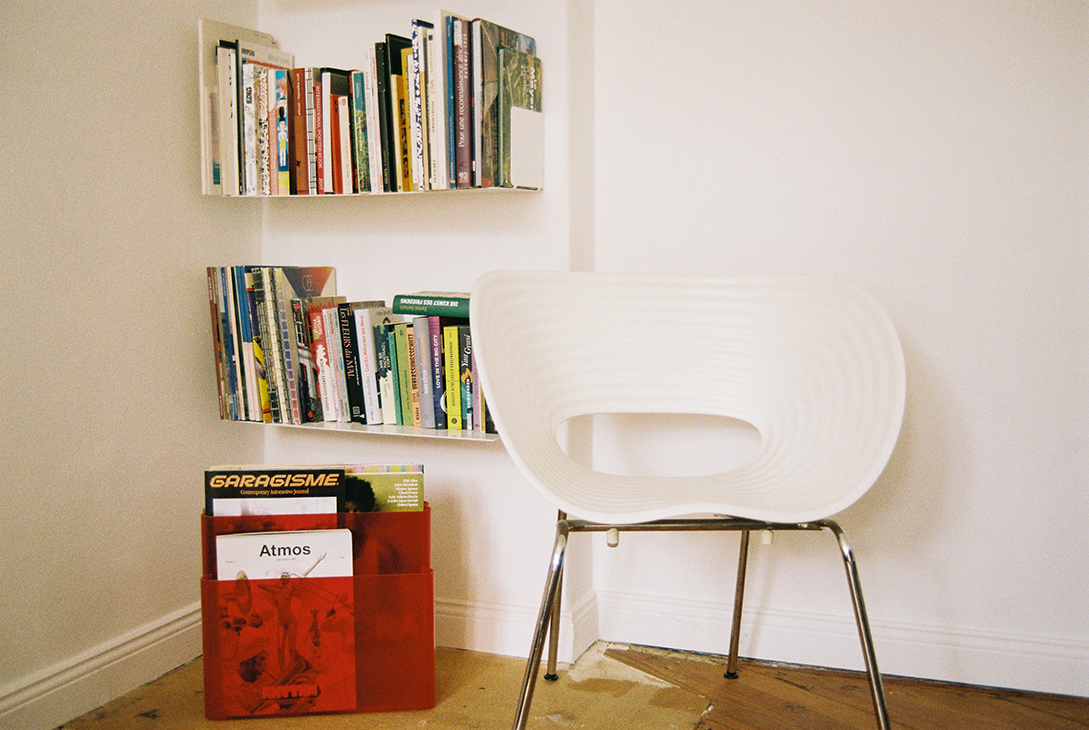
This is, I think, something that is very personal to my practice, and not every artist is also working this way. Not every designer is working this way. I'm trying to always remind myself that I cannot compare myself to others—to bring back my essence in a way, and what it is that is important to me.
To segue into LGW, what is that collaboration like?
The process in general is great, I think they are a big team, but I'm working with mainly two or three persons. So I think we have quite a nice, intimate relationship by now, very fluid. The nice thing about collaborating on a project is that, of course, I bring my intentions—since I often work alone, for example during the creative process—but sometimes it's also nice to be able to share my work, see how people respond to it, and have conversations. So mainly with Barry, Zsarà, and Bob, we've been working in a little bit of a ping pong: I bring ideas, I bring a mood board. Look at it. There was never a moment when they would tell me, "Oh, I don't know, we don't like that, we expected something else.” It's gonna be more constructive, like, "Oh, yeah, this is nice. We were just thinking maybe to do something about the colors or something about where the elements are placed, things like that." And then often I look at it, and I'm like, oh yeah, that's true, let me see how I can work with the feedback and improve the design.
Can you speak about your screen printing residency at Kapitaal last year, and anything you’re looking forward to this year?
What I really loved is that there is a lot of potential. There was a lot of improvisation—as we were printing, we started exploring; different colors that were not so planned, and then different layering. Three layers give these colors, and two layers give those, and then we ended up with basically 10 unique artworks, because of all the ways we explored with the colors and with the patterns. That was really amazing to be able to actually create really original artworks with this process of just playing around.
And then we did this wallpaper that was a backdrop for some of the artists who were playing at Kapitaal—because, as the official hangout of LGW, Kapitaal is also part of the festival program. But it was also really nice coming to the city and being able to get to know the cultural spots and the cultural kind of bubble that is happening, because I got to meet other artists.
In the first year there was aja monet, and she's coming back this year as a curator, so I’m really excited—she’s a poet, and something that really gets you to the core, that stays with you.