Tania Feghali is an Italian-Lebanese independent filmmaker, radio host and sound curator. Her work encompasses personal documentaries, commissioned films, sound curation, archival research, and visual reportages. Her practice revolves around film portraits, documenting the genesis of artists’ creative worlds and journeys, with a particular focus on contemporary scenes, avant-garde movements and improvisational practices.
For a special episode of our monthly COSMOS show on Refuge Worldwide, Tania and her co-host John Also Bennett have woven together music, voiceovers and reflections on the Mediterranean. We sat down with Tania to elaborate a bit on the importance of the region as a main influence on her work.
As a film- and radiomaker, and a music curator, your work combines various layers of sound and image. What is your background, how did you end up doing what you do?
My practice stems from three parallel streams: filmmaking, fieldwork research, and sound, and revolves around the intentions behind what we do and how we translate them into form.
I grew up in Italy in a house full of music, with a Lebanese musician father and an Italian dancer mother with a very fine ear. Film was always present too, mostly through classic cinema rather than experimental forms. At eighteen, I moved to Paris to study film. There, one of my mentors was a close collaborator of Pierre Schaeffer, the musicologist and pioneer of Musique Concrète. This encounter deeply shaped my relationship to sound and sound research as integral parts of image-making.
Later on, I began to pull these threads together through a creative project connected to Quincy Jones, which marked a turning point in my life and in how I work – a clear before and after. Music has been the steadiest fil rouge throughout my life. I’ve always been a jazz head and drawn to radio, but it was only in 2020 that I created As I Was Moving Ahead, my first broadcast on NTS Radio. Since then, the project has grown and branched out in many directions, later extending to other platforms including Radio Alhara (also one of the COSMOS Embassies in 2022).
Alongside this, I’ve continued to develop an independent practice across documentary film, sound curation and music-driven formats for artists, labels, brands and festivals. These streams evolve and overlap naturally throughout my work. I approach my practice less as a formal researcher and more as a sensorial one, guided by an internal compass, allowing projects and people to grow and connect organically, while preserving my independence and resisting fixed categories or expectations.
Can you give us some context around your interest in the Mediterranean Garden – as a symbol, a space and a source of inspiration for your work?
When I think about who I am and where I come from, the most natural answer is the Mediterranean. It is more than a geographical space to me; it is an ethos I grew up with, shaped by my origins in Italy and Lebanon, and by a profound sense of resonance.
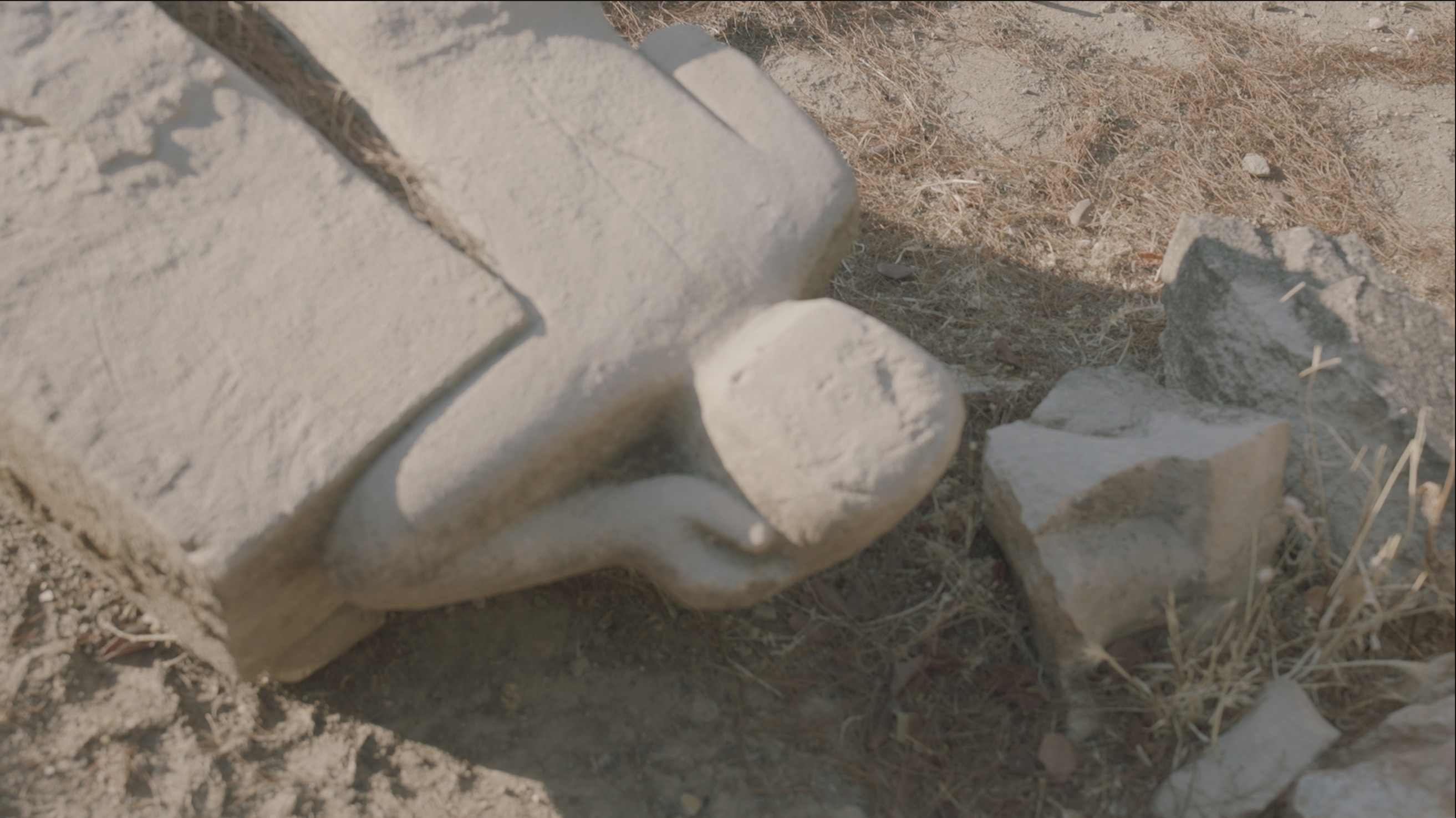
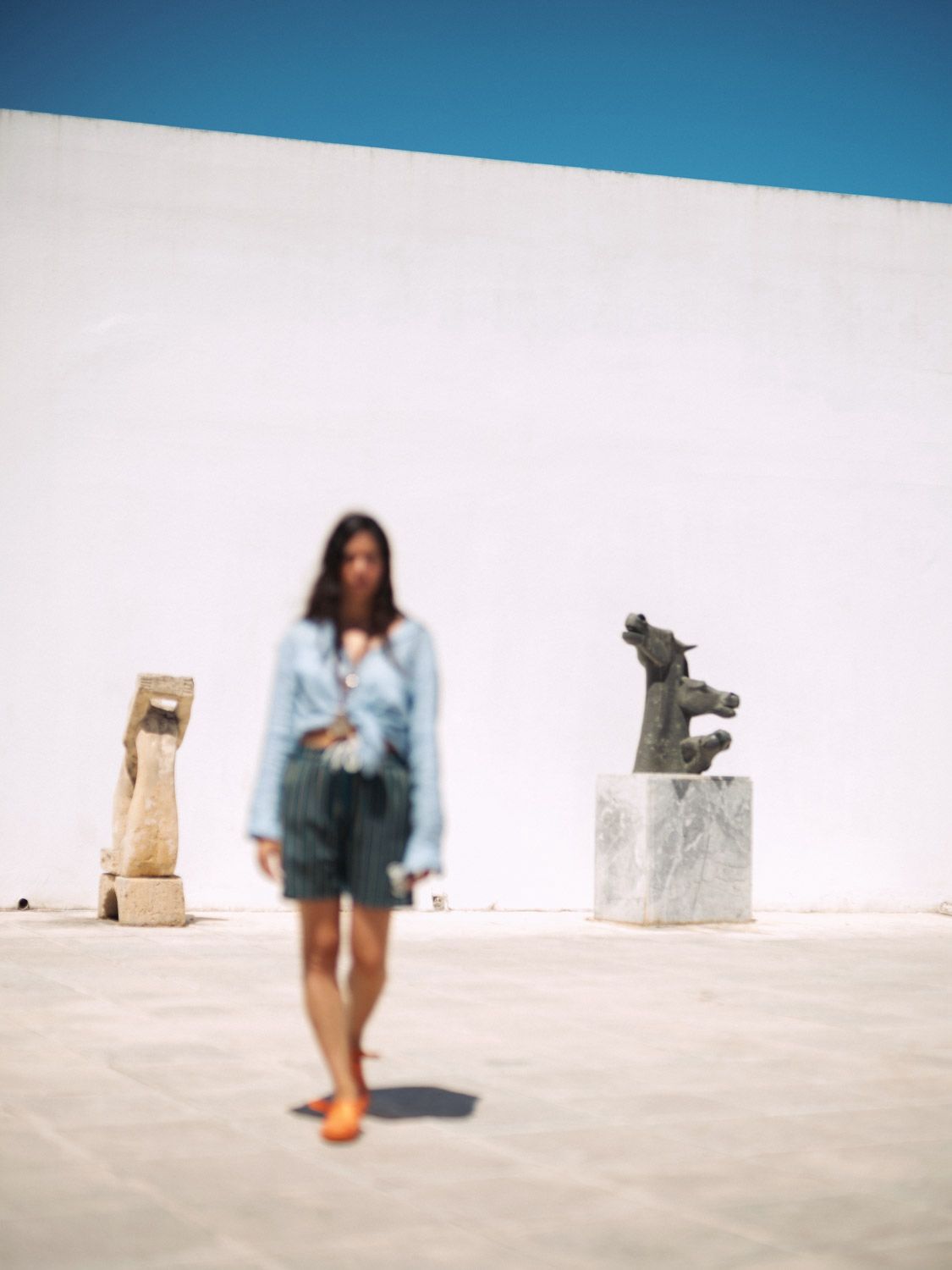
Within my practice, this has long been a recurring field of research and inspiration, alongside many different places in the world. The Mediterranean, historically, has also been a powerful space of cultural movements, openness and exchanges, even if this spirit is not often reflected in its current politics. When I was invited for a residency at the Vorres Museum in Greece, it felt natural to articulate this work through the idea of the Mediterranean Garden. The garden surrounding the museum embodies this Mediterranean sensibility fully and feels, in many ways, like the museum’s core itself. During the residency, I spent time with a botanist who studies and traces the Mediterranean garden across different geographies, recognizing it not as a fixed location, but as a living, traveling ecosystem — as we are.
 - Photo Christina Vantzou.jpg)
The broadcast for Refuge Worldwide (above) is a beautiful collage of conversations combined with John Also Bennett’s soundscapes. How did you two end up collaborating, and what is it about his music that speaks to you?
I’m deeply interested in improvisational practices, in music and film, but also as a way of being in the world.
Before heading to the residency, and while filming early fragments of the project, I had started collecting ideas and names of musicians I felt drawn to collaborate with. But it was only once I was there that I stumbled across the work of John Also Bennett, and it touched me immediately. I felt we were trying to say similar things at the same time. Once back, I reached out to him, and almost uncannily, the very day I called him he was about to release Στον Ελαιώνα / Ston Elaióna, a record that felt as if it had been made for this project. It felt almost as if we had parallel visions. From there, the collaboration unfolded very naturally.
The broadcast was shaped with this approach in mind. I wanted the hour to feel like a shared soundscape, as if we were in the same place, walking at
sunset, exchanging thoughts about the Mediterranean and our artistic process in a stream-of-consciousness way. I began recording between Milan and Barcelona, and sent John a few open questions to respond to as voice fragments. His music became the backbone of the hour, and as he sent recordings back, I started weaving everything together, allowing the piece to breathe and inviting the audience to walk alongside us.
You’ve spent time in numerous places around the Mediterranean. Is there a certain sensibility, an atmospheric quality that you keep coming back to? Maybe even a sound?
Yes, this bond has also been reinforced by the many Mediterranean cities where I have lived or spent significant periods of my life, including Athens and the Cyclades islands, Beirut, Tangier and Barcelona, where I am currently based.
There is also something very grounding about daily life in these places - going to the market, talking about what’s there, touching it and tasting it, taking the bike and going to the sea or to the mountains. Going out at the end of the day just to catch the sunset or the moon, and watching it together. Nature is very present, even though you are in the city.
Sound certainly plays a central role in this way of inhabiting a place. The soundscape changes where the sky opens onto the sea. There is a constant murmuring: different birds, the wind, the sound of the gas seller ticking on his bottle (knife grinders in Italy or chair caners in Athens), voices in the streets or at the market – loud and tender at the same time. Church bells, Orthodox hums, or the chant of the Adhan. These layers coexist naturally.
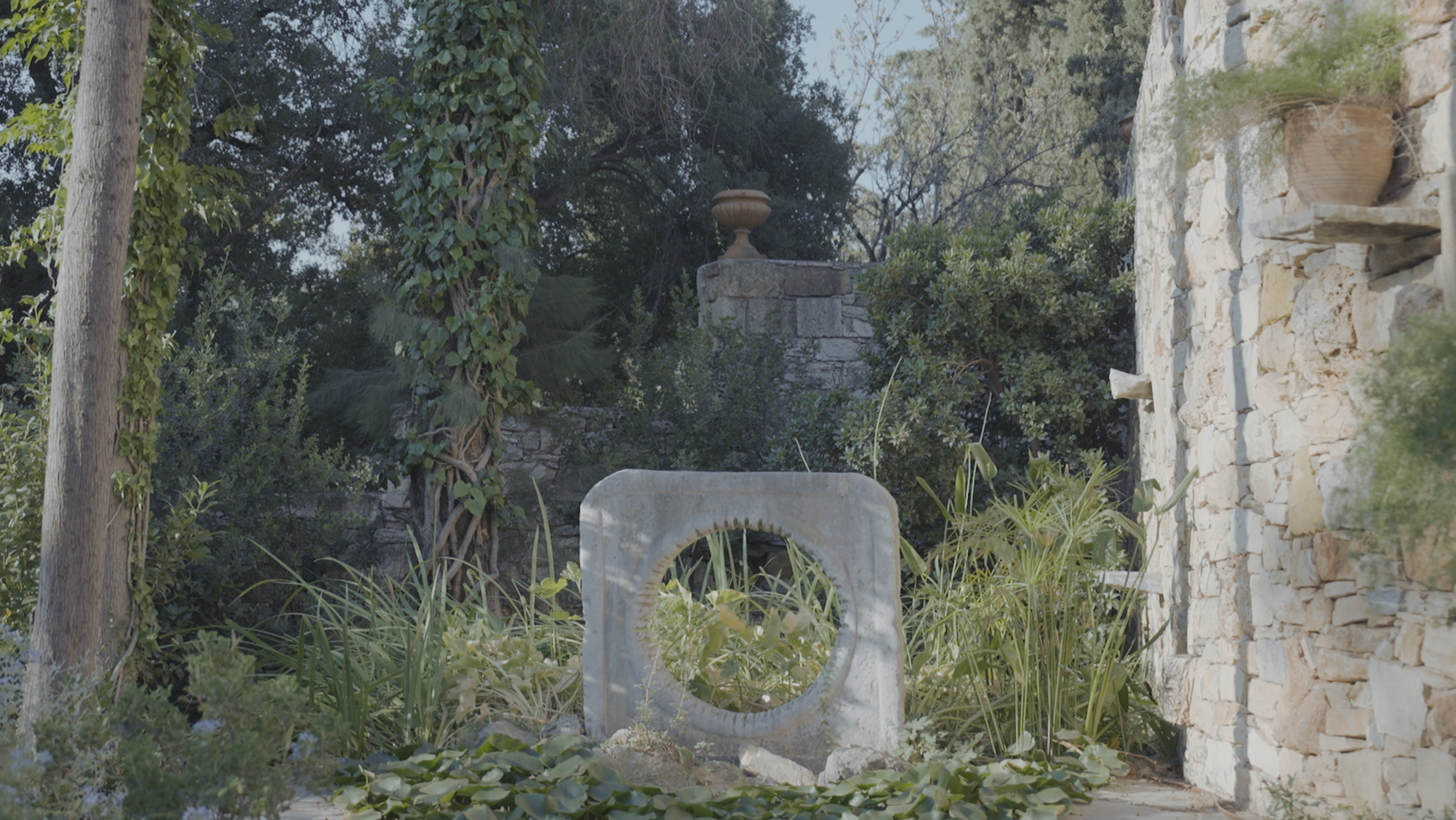
This way of perceiving carries directly into an upcoming film project developed in relation to the Vorres Museum in Athens. The film is a short documentary centered on the museum’s Mediterranean Garden and the community whose work is closely connected to the land. The project is currently unfolding across different forms, with a release planned for 2026.
What other film and sound projects are you currently working on – anything you can share already?
I’m usually working across several projects at once, at different stages and tempos. Alongside longer-term documentary projects – some already shot, others commissioned or independently initiated – my practice takes shape through more immediate, collaborative forms.
In parallel, I work closely with artists and musicians on commissioned and self-initiated projects, creating films, video pieces and sound-led works connected to releases and special projects, often in dialogue with independent contexts and collaborative, artist-led environments.
At the moment, I’m also developing a documentary project around improvisational practices and contemporary jazz scenes, and the questions they carry, alongside a new radio series centered on musicians’ journeys and inner worlds, approached through a non-linear, poetic, documentary-driven lens.
Teaching and workshops have also been a consistent part of my work over the years. I’ve taught film within BA programs at the New Academy of Fine Arts in Milan, as well as in other learning contexts focused on image and sound.