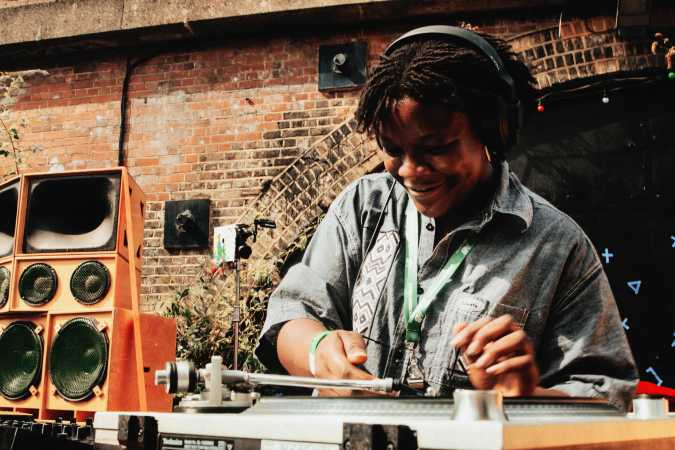
Tabideee is a DJ, researcher, and archivist exploring the critical contributions of Black communities across the continent and diaspora to electronic music. Her sound pays tribute to Afro-Arab electronic productions, specifically exploring her Sudanese heritage and neighbouring influences.
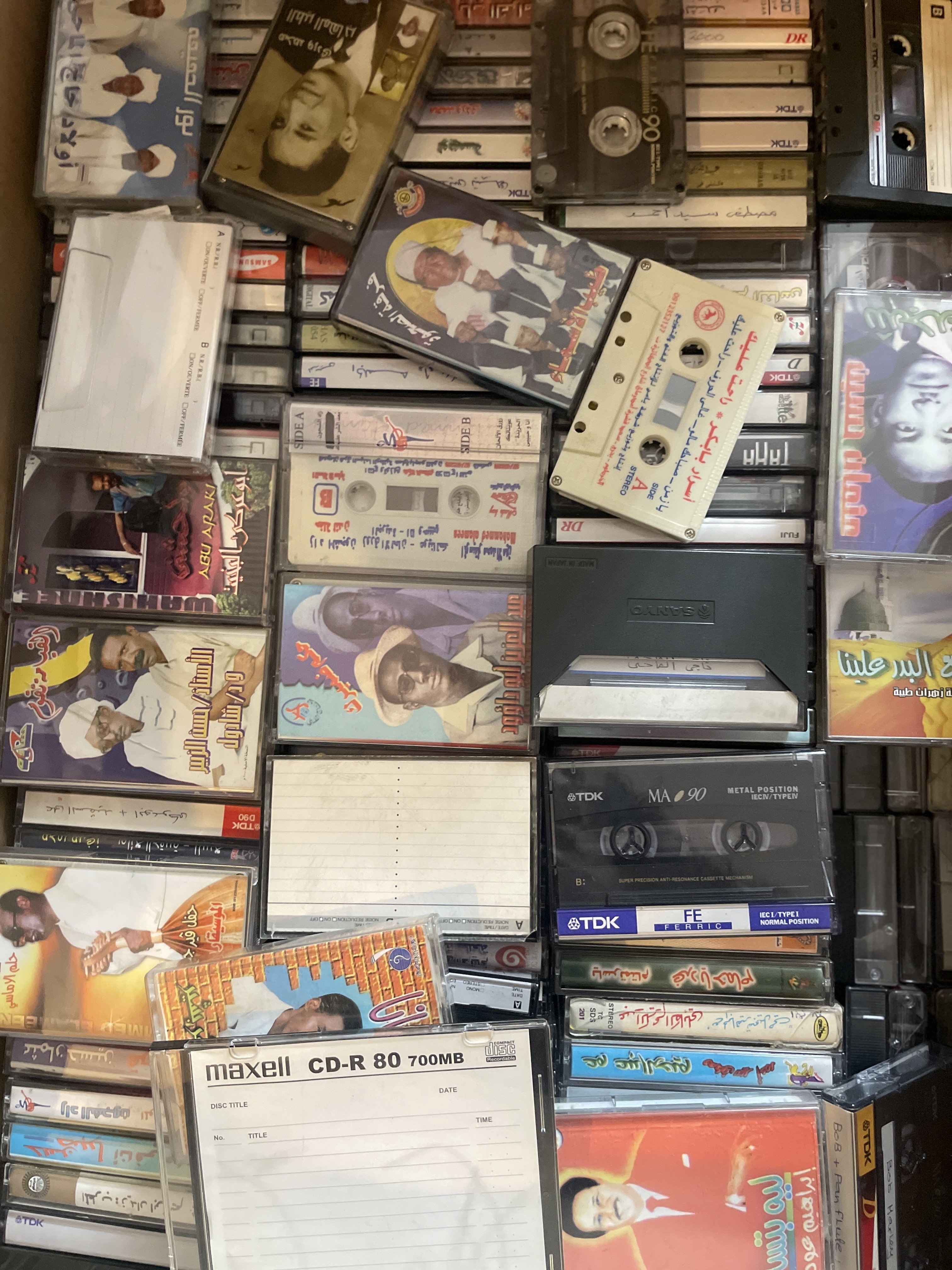
Through this, she has developed an archival practice documenting music that moves beyond traditional institutions — drawing from platforms like YouTube, SoundCloud, cassette mixtapes, phone recordings, and personal fieldwork. This evolving archive serves both as a method of documentation and sample pack: a palette of sounds used in her sets, soundscapes, audio lectures and her own productions. For COSMOS x Refuge Worldwide, Tabideee presents a primer to Sudanese electronic music alongside some photos from her personal archive. We’ve sat down with her to learn more.
Let’s start with the personal undertones of your sound practice: can you speak a bit about your own Afro-Arab background, growing up in the UK?
My grandparents came to see us often, but we also flew back to Sudan at least once a year to visit extended family. My parents wanted us to develop our own personal relationship with our cultural identity and gave us the trust and freedom to discover that for ourselves. The kind that leads to my own friendships and formative experiences… and chaos, which let me cultivate a deep connection to the land. What made that particularly special was how this extended beyond Khartoum. I had family in Omoudman, across suburbs like Soba, other cities like Kosti, and small villages like Nuba.
Outside my immediate Sudanese circle in the UK, there was a large community from North and East Africa, in the town where I grew up. On Saturdays we had Arabic school, where we would learn to read and write but also connect with other kids from across the Arabic-speaking world.
What was your musical socialization like? When did you encounter club culture, and when did you get active in it yourself?
Sudanese music has been a huge part of my life since I was a child. I went to countless weddings, in the UK and across Sudan, but also my family just always threw these intergenerational parties. Like, an aunt would invite an artist she knew to perform in her living room until the early hours. Because of the intimacy of these spaces, I had this unmediated access to soundsystems, instruments and music.
My uncle, who was 16 and at college at the time he lived with us for a few years, was in the 90s hip hop scene. He would always bring home mixtapes and CDs to play on the Hi-Fi system at home.
In relation to this, my early years within electronic music were compartmentalised. I was living in Bristol for a year, going out three or four times a week to venues across the city, and it’s where I fell in love with the genre as a whole. But the Bristolian subculture, its heavy drum and bass influences that came through the sound, was really striking. Local producers like Massive Attack and Batu created tracks built from these dark, bass-heavy textures, and even international artists like Helena Hauff would pay homage to the city’s sonic roots in her sets. The compatibility of these sounds guided an inevitable step into the Black origins of electronic music. I went back to Bath to finish my degree, where Origins was bringing Black pioneers like DJ Stingray and Honey Dijon to these small 220-cap venues and, again, this really intimate access to what and how these artists mixed. I had a residency on a Bristol station 1020 called Black to Techno, where I would research and share Black electronic scenes across the world. I quickly found myself back to the continent and the electronic sounds that were growing from localised scenes, notably the Nyege Nyege crew and the unbelievable sounds coming out the label that they distributed from East Africa. Moving back to London after I graduated, I just threw myself into the club scene armed with this sound I wanted to create, one that honoured these global Black pioneers of the genre, but with a nod to Afro-Arab electronic production, alongside the Black British sounds that soundtracked my introduction to rave culture.
As a fan of electronic music and club sounds, what is it about the sonics of Sudanese (electronic) music that speak to you?
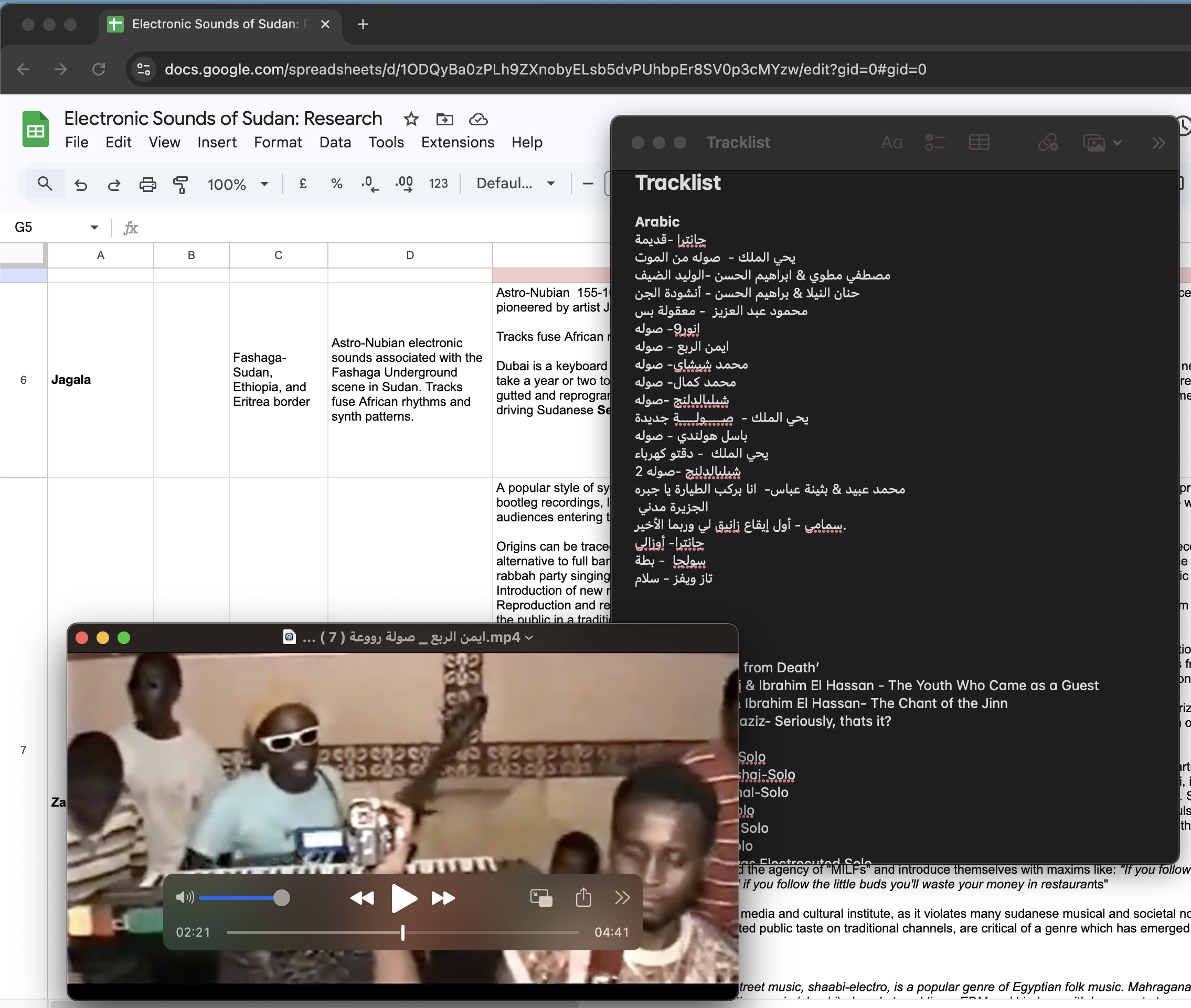
Over time the electric keyboard – Yamahas, gutted and reprogrammed by keyboard mechanics to suit polyrhythms for Sudanese notes – became an economic substitute for full bands. They allowed for artists to move away from traditional band and orchestral music forms, made composition much more accessible, which was a rebellion from the traditional mainstream music scene. The use of the keys was popular even in my family, and loads taught themselves to play for our own parties. Sudan’s heavy sanctions meant electronic music from there grew largely cut-off from Western influence. You can hear that in the sound. The self-taught, homegrown quality is what makes it so relatable.
Zanig is one popular style of synth-driven music, consisting of the keyboardist and a singer. The name comes from the Sudanese Arabic word 'Zanga' meaning 'suffocation'. These raves are so popular, so intensely packed and the synth solos so hypnotic, you get stuck inside and can’t move. There’s something really beautiful about that — a genre defined not from the stage, but from the dancefloor. It makes it feel intimate, personal, like it belongs to the crowd as much as the artist. The genre was pioneered in the 2010s by artist Aiman Al Robu, son of Salah Brown, a well-known Sudanese jazz and blues musician. Al-Robu worked with the much loved Mahmoud Abdul Aziz, affectionately known as Al-hoot (The Whale) for his talent, and his outspoken criticism of the Sudanese government through scrutiny and public punishment. Al-Robu developed a sound with dubby slow starts, that then moves into rapid accelerations and decelerations, trance-y solos and singers accompanying the production. Al-Robu also drew from ‘agani banat’, a female-led genre that means ‘women’s songs’. It originated from slavery, and its lyrics are a social commentary on women’s position in Sudanese society. Darba is an evolution of the genre, faster solos accompanied by drums. That’s what you hear in the final half hour of the COSMOS x Refuge Worldwide mix.
Zanig: Anwar 9 (انور9- صوله)
As Zanig and Darba deviate from the ‘traditional’ Sudanese sounds, and the agani banat, which also contributed to the development of the genre, defined as ‘loose’, the Sudanese state deemed these sounds as degenerate. Active government campaigns attacked the genre for defying societal norms and public order laws. Artists are therefore really underfunded and, like most non-traditional sounds, grew in an underground scene.
Darba: Taso
The mix you made for COSMOS x Refuge Worldwide is a perfect example of how you combine archival work with recorded tracks. Can you break down your process for us?
I usually try to decide the narrative I’m looking to tell. For the COSMOS mix I wanted it to be informative, and tell the story I have so far of Sudanese electronic music, but also give space for listeners to experience the sound and subculture that upholds it.
I started with Ibhraim Al Hassan, who performed reinterpretations of two well-loved and known Sudanese tracks with his synthesiser, notably ‘The chant of the Jinn’ with Hanan Alania live on Sudanese TV. I wanted Sudanese listeners to hear a rendition of a classical song they widely recognized interpreted on the synthesizer, with the 80s TV jingle to capture that experimentation with electronic music by Sudanese artists has been around for decades.
Ibhraim Al Hassan’s composition of ‘The Chant of the Jinn’ with Hanan AlNil, 1985
It then moves to an interview with Aiman Al-Rubo during the height of Zanig that was being recorded in a car. Like with the TV interviews, I keep the jingles and adlibs and edits as a nod to the era of the internet the audio comes from. The rest of the mix moves from Zanig to Darba mixing at set points so it feels one long single composition . To accompany the background of the bootleg recordings, I also added field recordings from my personal family’s archive, to emphasise the personal memories behind Sudanese music.
It ends with two Sudanese artists, Taz and Soulja who are producing contemporary electronic tracks today.
You don’t only use tracks and found sound, but also Arabic vocal snippets – where do they come from usually? Can you elaborate a bit more about how (and since when) you’ve been putting together this personal archive?
With the loss also came the fear of forgetting what had come before which was the motivation to begin a personal archive. I now document my own family and the museums they carry in their mouth through their oral histories but also collect field recordings, conversations and the moments that capture my family’s long-standing relationship with music as a soundtrack to love, loss and migration.
In the wake of the war, my relationship with my family’s personal archive also drastically shifted. The destruction of our ancestral home, and the loss of generations of personal belongings alongside millions of others, paired with the looting of the Sudanese National Museum, meant the value of photos, cassettes, books and personal items we have, and what exists online, increases not only in personal value but from a cultural preservation perspective. I digitise our commercial cassettes, personal mixtapes, photos, documents whilst exploring ways of archiving our digital footprints: text messages, Whatsapp group chats and Facebook groups. With our history now embedded in these items, it’s a critical opportunity for us to redefine and critique the institutional archive.
The critique is necessary to challenge the absence of sonic subcultural moments and underground movements in the institutional archive. Given the socio-political context sudanese music exists in, to challenge aesthetics, sounds and narratives that we are told hold value, due to political, social and religious agendas. With Zanig and Darba, they’re bootleg musical genres fueled by a digital revolution in the 2010s. Bluetooth, Soundcloud, Facebook, Whatsapp, and Youtube gave artists and audiences the means to record, archive and distribute tracks outside traditional media fields. Collecting these lo-fi sounds but capturing so much more than the music itself – the spatiality of the genre, audience engagement as part of the composition, the soundsystem culture...
Zanig playlist on Soundcloud of bootleg recordings by user Wafa’a Satti
Are there specific resources, websites, radios that you can recommend if people would like to dig deeper into the history of Sudanese music?
I can’t speak about this work without crediting Izzo, a Sudanese Architectural Designer, Curator and Archivist based in Nairobi. His practice examines Sudanese genres of music and their spatial dimensions throughout history. Izzo has been researching and documenting underground Sudanese genres, and the socio-economic and political dynamics that shape marginalised and alternative contemporary cultural landscapes. His platform Al-Rassa is an incredible resource of written articles and online collections.
When it comes to the sonic archive, Sudan Tapes Archive is a brilliant resource. Founded by Haneen, the platform digitises Sudanese cassettes and media for audiences to listen to for free via Soundcloud.
Sudanese DJ Basma has an impressive collection and knowledge of Sudanese music. She recently, and rightfully so, performed a selection of Sudanese records at Peter Doig’s House of Music at the Serpentine. She also has an incredible monthly show on NTS, Khartoum Arrivals, where she shares songs and stories from Sudanese artists across the country, neighbouring regions, and beyond.
Also: this mix was the first to showcase this aspect of your sound practice. Where do you see it going? Could you see yourself perform these sets in a live setting, in installations etc?
Reimagining the archive is about making it a living resource that finds its way back to our communities. I play a lot of 100% Sudanese electronic sets using tracks from the archive that can withstand being played on a high-spec sound system, and the response has been extraordinary.
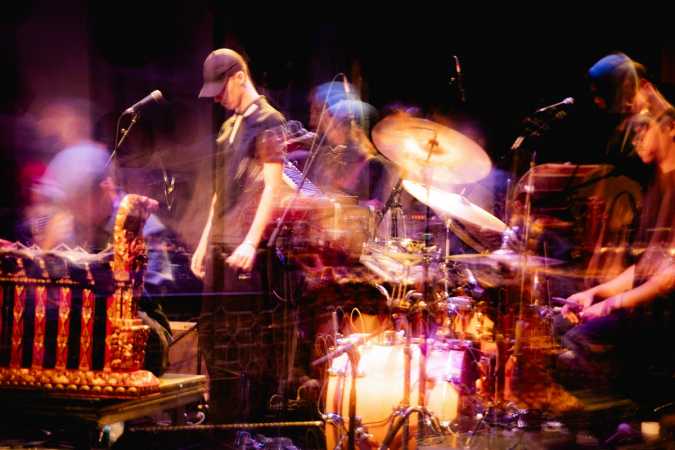
I’ve recently begun using Ableton, and started to manipulate some samples to produce edits for the club, but I’m also conscious of overproducing the genre, and the risk of losing the improvisational intimate quality of the solos. So I’d also love to collaborate directly with keyboardists during live performances, and create moments within my set for them to play. I’ve seen similar models that are really successful, like where Palestinian percussionist Simone Abdullah performs with DJs. The dynamic creates a much more organic and responsive sound that pays respects to its origins, and also the craft of the really talented keyboardists. I also want the performances to question what our expectations of ‘club’ spaces are, and what spatial configurations they accommodate. How can they best facilitate setups for sounds outside the Western context?
But from a research and educational perspective, I’ve also performed active listening sessions and audio-lecture formats at cultural institutions to provide more of the theoretical context and bring Sudanese art to the Black electronic music discourse. But what’s unique about these performances is that the information I work with, the bootleg recordings and my personal family archive, results in a really emotive experience and a resource that captures the emotions of memory too. I find that this also challenges what we reference in academia, my personal archive captures what sound holds that traditional research often can’t — home, loss, gathering and joy.
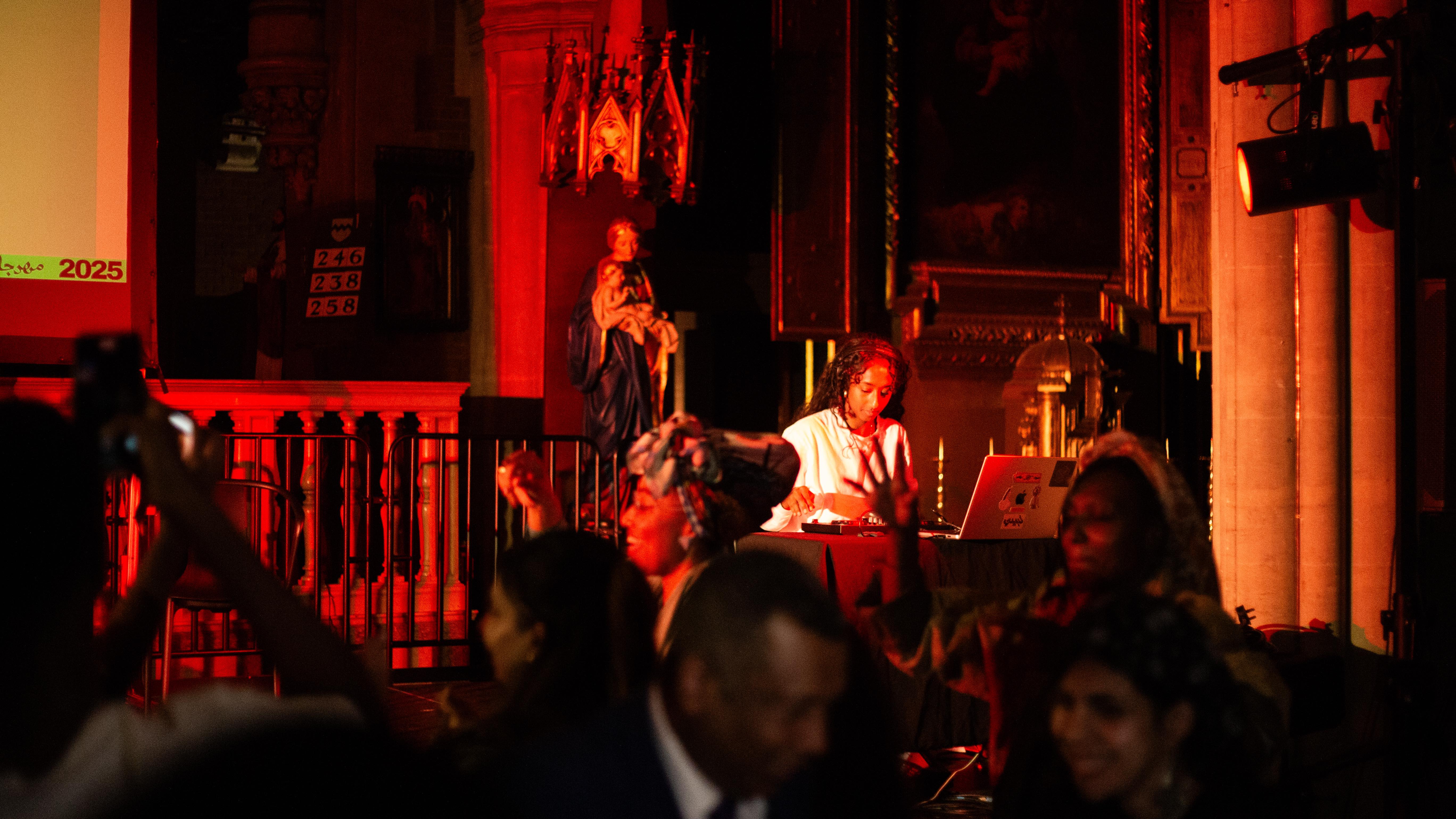
You recently were part of a Sudan Fundraiser in London. With the state of world, it’s important to keep pointing towards Sudan as a major war and humanitarian crisis that tends to gets less media attention. Can you recommend ways to stay informed and to get active that you personally found helpful?
The consequences of this war for communities across Sudan has been catastrophic. I really urge people to donate to some of the amazing grassroots initiatives that are supporting communities across Sudan:
The Sudan Solidarity Collective
Let’s Have Hope
SAPA
Habobas House
Sara Elhassan – for daily updates
Decolonize Sudan – anti-imperialist education and advocacy on Sudan
Seeing the World Through Sudan Syllabus – a resource for understanding the roots and context of the Sudanese crisis