Doğa Sultan is an Istanbul-based designer, who produces visuals in multiple disciplines. Her work sits at the intersection of textile surface research, garment design, street art, and independent publishing. The base of all of her activities is the countercultural frameworks provided by punk and hardcore.
In this context, she runs the Antipode book series, which documents underground music scenes across different regions, as well as DIY culture and local countercultural networks. Besides publishing, Antipode runs events and releases music compilations. Introduced to us by our COSMOS Embassy IDGK, Doğa put together a special episode of COSMOS x Refuge Worldwide, highlighting the SWANA punks she featured in the first issue of Antipode, with a few hints at what’s to come in issue #2. We met with Doğa in Istanbul to learn more about the project.
Antipode is a book series that highlights punk scenes in different parts of the world. How did you personally get involved with pop- and DIY-culture in the first place?
Although it did not have a direct connection to the environment I grew up in, being born in 2002, and having access to the internet, allowed me to encounter the Riot Grrrl Movement (an underground feminist punk movement) and the older zine culture at an early age, almost by chance. Around the ages of 12, 13, I began making my own zines. I reached out to women+ individuals producing work within different subcultures; together we created content, collages, and interviews, and I printed my own zines.
As someone who approaches subcultural production through visuals: how did you make space for your own creative efforts in the context of punk and hardcore?
As far as I can remember, what I’ve been doing has never really been writing, or anything like that.
As I started encountering many different materials throughout the process, I realized that I could also transform them into a written form. So I began putting my research into writing. It was a first for me (not counting some old zine interviews, haha), but moving forward I’d like to further develop my writing practice and build a space where it exists alongside my visual works.
In the punk and hardcore scene, I mostly produce through design. Designing merch for bands I like, creating pieces they can wear on stage, or turning my collages into album covers, are all part of that process. Sometimes we also produce things together for stage setups, using DIY methods of course. Most of the time, because of limitations or necessity, everyone on stage ends up having to be a bit of a designer anyway, ha. Different things always end up feeding into each other throughout this process.
Can you elaborate a bit on the circles and crews in Istanbul you’re involved with? Can you characterize the scene and the people that you found here?
Our scene in Istanbul is quite dynamic, but at the same time very challenging. The groups and circles I’ve connected with here are not only people who make music; they are also collectives that share a political stance and place solidarity at the center. I would describe the people here as resilient. Despite all kinds of economic and social pressure, this is a community that continues to produce, creating its own spaces and networks. Of course, there are also many negative aspects.
We learned about your work from our COSMOS friends at IDGK. How did you get in touch with them?
IDGK has already been an important part of the local scene here; we kept running into each other at the same shows and places.
I’ve known Alena {from IDGK} in particular for a long time. When I started the Antipode, Mama G. from Goblin Daycare said, it would be amazing if IDGK could film live sessions by the bands from Antipode. They are already making incredible videos, so I got really excited and reached out immediately. For their performance series Yuva at Karga, we discussed including these bands in the videos they were shooting. They were very happy about it, and that’s how we entered into a collaborative production process. The results have been really amazing, and they’ll be released soon. I’m so excited about what they’ve created!
Antipode #1 turned out to be a beautifully produced book-zine. What inspired you to become a publisher of sorts? And what advice would you give to young creative minds that want to start their own publication?
Can Rogge designed the graphics, Ghas Attack made the logo, and for the launch tour across different countries, many collectives contributed. Behind the scenes, countless people supported and helped. Solidarity was everywhere.
As mentioned, I’ve never really considered myself a writer or publisher, but zine culture comes from exactly that spirit; expressing what you want to say, draw, cut, and paste, turning your thoughts into something tangible.
How did you go about choosing which bands to feature and how did you contact them? For people who want to dig into punk acts from the SWANA region, what’s a great band or scene to start with?
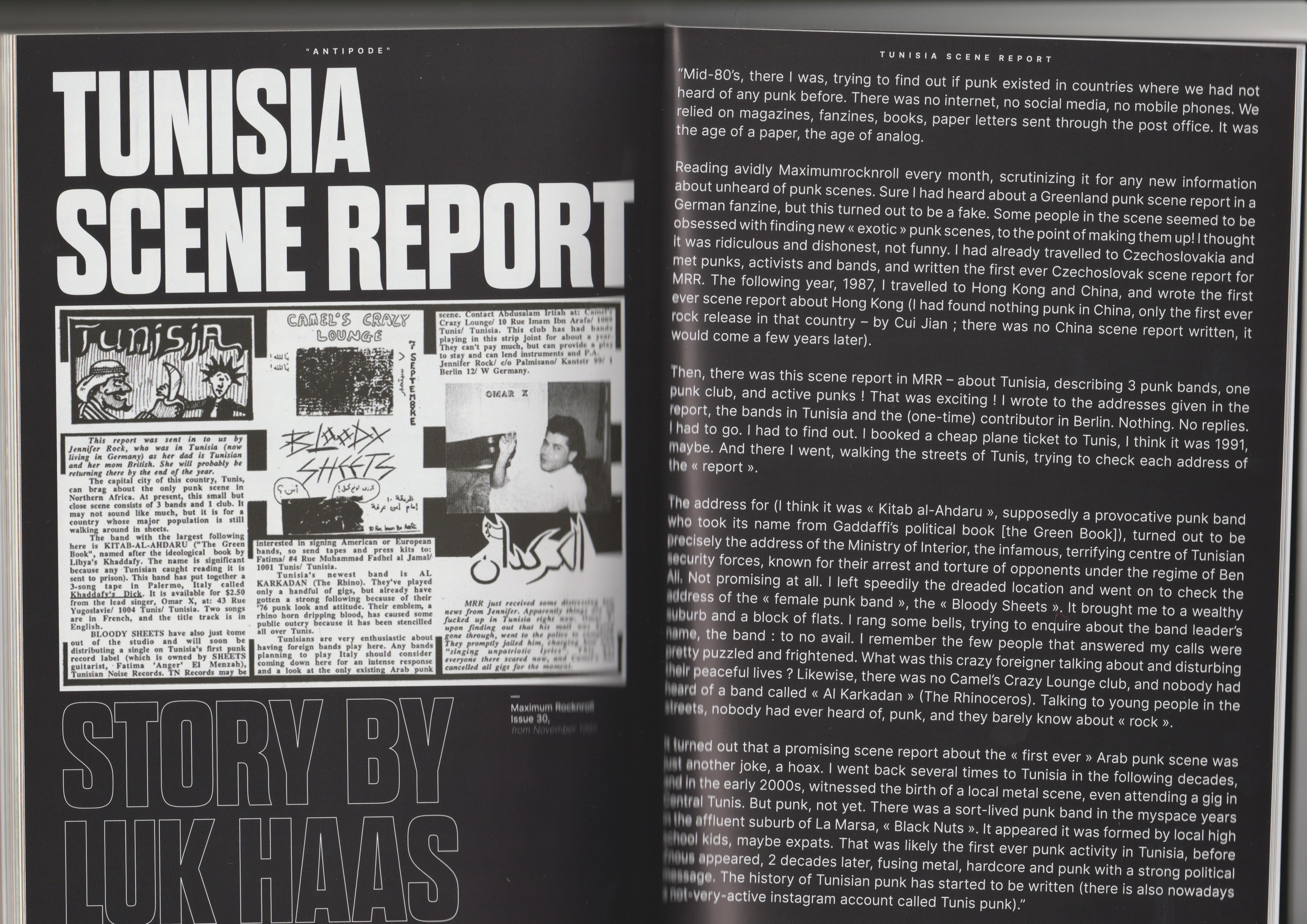
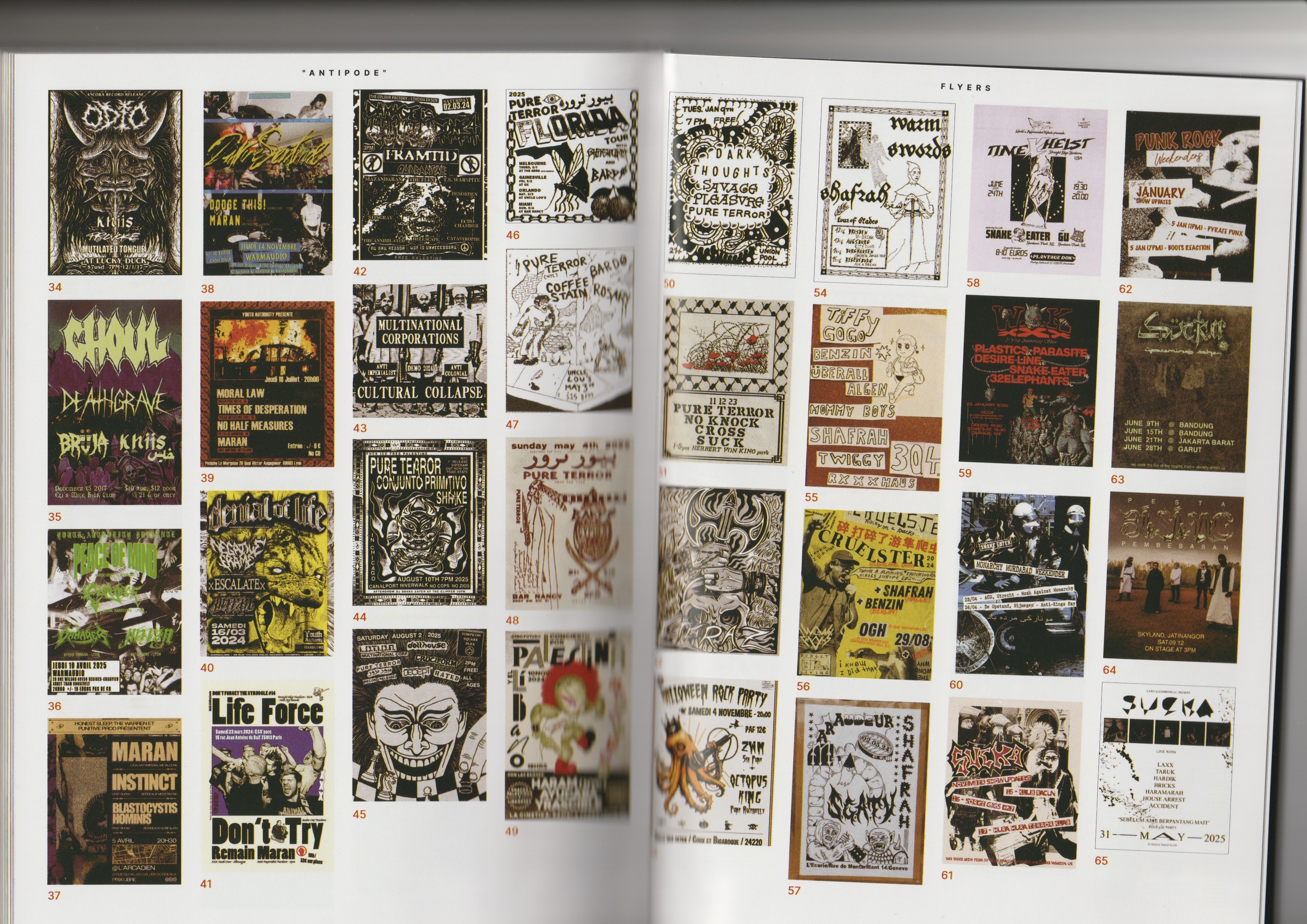
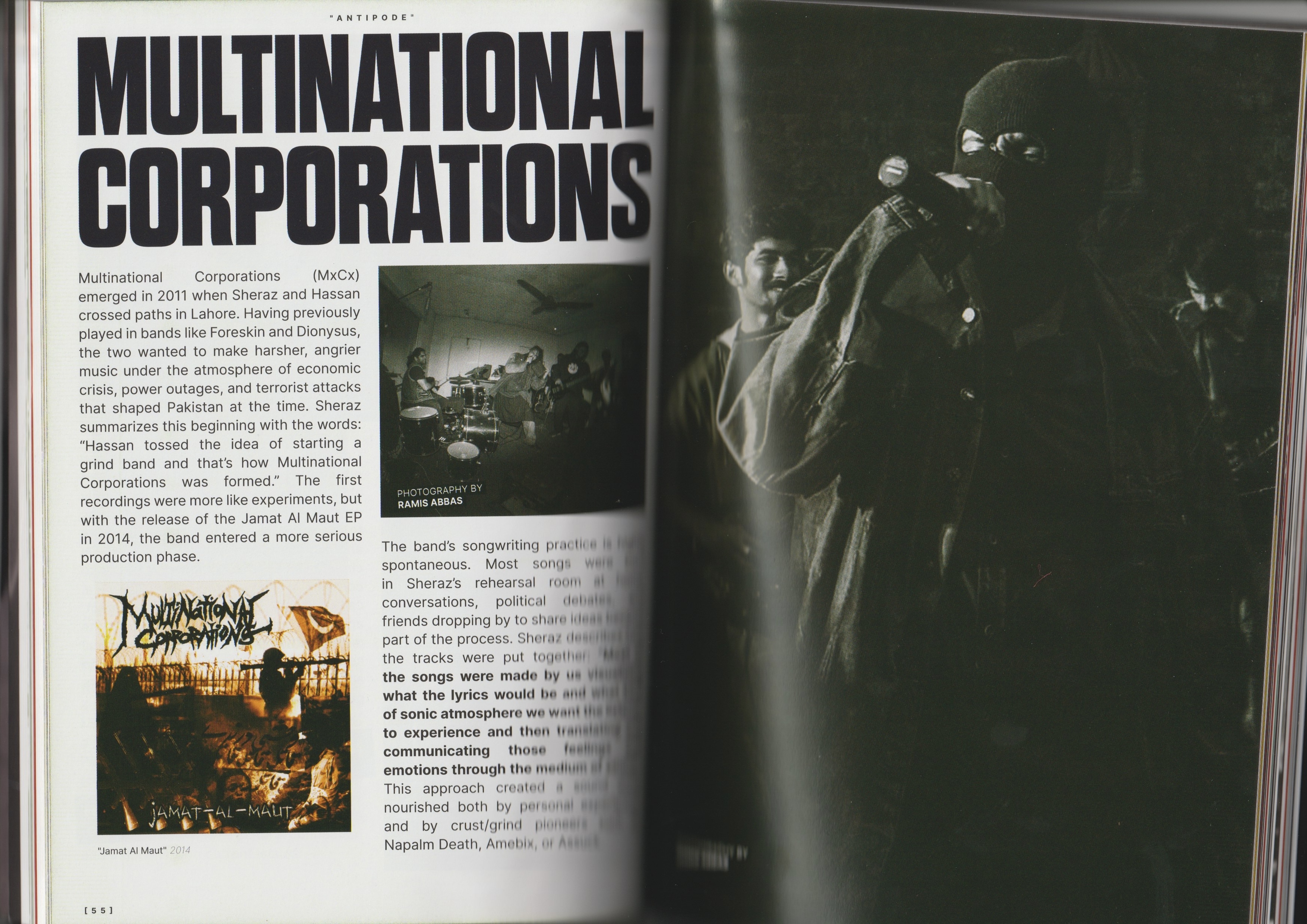
When choosing the bands, I considered both my personal taste and their impact on the local scene. Their stance and attitude is important to me. I also make a point of including young bands that have just started out. Bands from my generation. Unfortunately, I can’t name just one band… and for anyone wanting to dig into punk from the SWANA region, a single name wouldn’t be enough anyway. That’s why I’m sharing the full list of the first issue of Antipode:
Some aren’t from SWANA, but I added them as a hint at the second issue, focusing on South/Southeast Asia, and their diasporas as well.
I don’t put any restrictions on it. I’m always happy when I discover new things or when people reach out and want to be included. That’s why each volume contains hints about the next one, and the following issue starts by expanding on the previous one, delving deeper into its content while also introducing new material.
Antipode Vol. 1 is out now. For the second issue, Doğa has put out an open call for bands from SWANA, South-, and Southeast Asia to be featured. If you’re interested, you can write to cosmos@leguesswho.com and we’ll connect you.
Do you want to receive articles, interviews and mixtapes from COSMOS in your inbox? Sign up for our Substack-newsletter.