After the premiere of their COSMOS short doc, we linked up with director Rei Kuroda and producer Yusuke Nakano to find out more about how they approached their project. Tasked with depicting this musical orbit surrounding record label NAKID and the OTO building, Rei, Yusuke, and their team bridge the gap between Osaka’s adventurous musical heritage (Boredoms et al.) and today’s torchbearers of experimentation, among them goat’s Rai Tateishi, and Koki Emura of EM Records.
2026 COSMOS Embassy NAKID is a record label founded by goat (jp)'s Koshiro Hino in Osaka City, with its headquarter located inside the OTO Building. OTO also houses many other creative studios and ateliers, as well as one of Japan’s leading underground clubs, Daphnia. Just across the street from the building is Creative Center Osaka, a former shipyard turned into a multi-functional art and event space. NAKID operates on the intersection of internationally active innovators of contemporary electronic music and the local scene deeply rooted in the rich history of avant-garde arts.
Hino, an artist and composer also known as YPY, is the leader of bands such as goat (JP) and Bonanzas, one half of the duo KAKUHAN, and has been involved in many other projects, all while running the cassette tape label birdfriend.
Rei and Yusuke, when you were first approached about this film project, did you immediately have a vision for how you wanted to tackle it?
YUSUKE
Yes, I did.
I should also mention that what we’ve covered only a small part of Osaka’s music scene.
REI
Initially, given goat’s musical style and overall image, I was thinking of making something more experimental and observational — a film with very little dialogue, unfolding in a quiet, almost matter-of-fact way.
However, as I began learning more about Osaka’s music scene, I gradually realized that it might be better to take a different approach for this documentary, one that would allow us to communicate the unique character of Osaka’s music scene in a way that was more accessible to the audience. That led me to shift the direction of the film.
For those of us, who have never been to Osaka, how would you describe the energy of the creative scene of the city at the moment?
REI
Actually, before getting involved in this project, I hadn’t spent much time in Osaka myself. But I think most Japanese people know that Osaka is a city deeply associated with comedy, with some of the country’s most influential comedians and comedy theaters.
YUSUKE
I was born and raised in Osaka, and I think one thing that hasn’t changed is that, even in a world where everything has become so focused on efficiency, people still prioritise what’s interesting and fun. It’s a very energetic city, but there’s also something quite relaxed and easy-going about it. Even the ordinary older men and women you see around the neighbourhood are creative in their own way.
Rei, do you feel an artistic kinship with the protagonists of the film?
REI
I don’t have any direct connections to Osaka’s experimental music scene, but I perform music myself, in addition to working with photography and film. I’m also a fan of Boredoms and goat, so I found the stories told by the people in the film really fascinating.
My own performances tend to be driven by a more explosive kind of energy, and when I listen to music, I often approach it more intuitively, through sensation rather than context or history.
In a way, I felt that these seemingly different approaches were forms of the same kind of explosion, and that there was a kind of sensory resonance between them. That contrast and connection were really fascinating to me.
What is your working relationship, Yusuke and Rei, as the producer and director of the film? Have you collaborated before?
YUSUKE
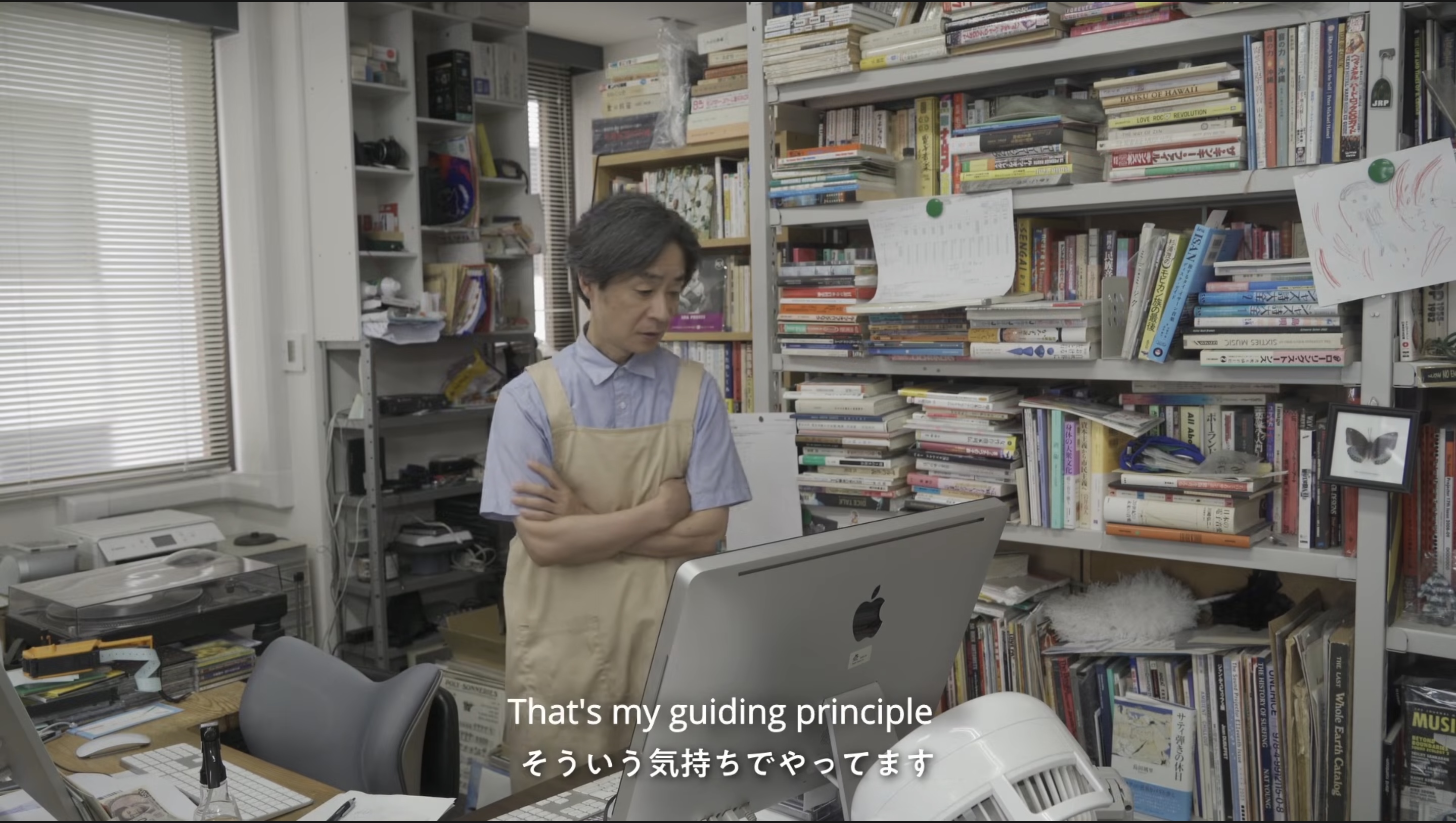
My involvement was mainly in choosing the director, selecting the people to interview in consultation with Hino, and discussing the general direction of the film with Rei and the assistant director, Kinu. After that, I left the creative process in Rei’s hands. From the beginning, I wanted to work with a younger filmmaker who had a natural affinity for this kind of music and art.
I wanted the film to reflect the perspective of an audience unfamiliar with Osaka’s music scene, as well as that of Rei and Kinu’s generation. Rei is a wonderful artist who works not only with film, but also photography, music, and performance. I felt she would be able to capture what makes the scene so interesting, even with the challenge of fitting everything into such a short film.
REI
I’ve had the opportunity to photograph artists’ performances for Yusuke’s other project, MODE.
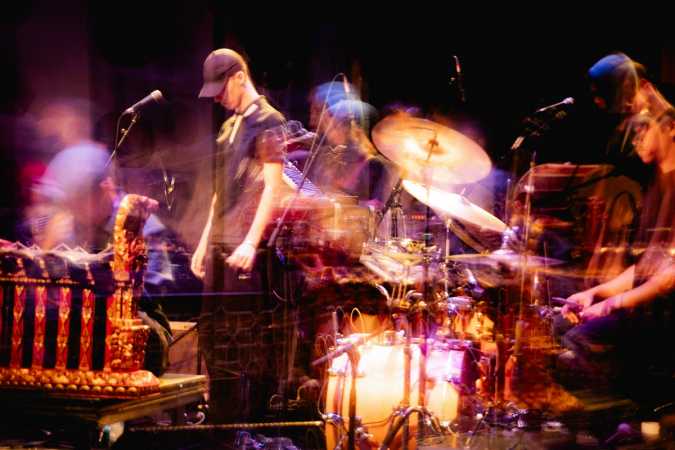
My photography tends to be quite idiosyncratic and driven by my own obsessions and personal sensibilities, which isn’t necessarily a style suited to conventional client work. But Yusuke really understands those qualities in my work and commissions me with that in mind. As a result, I’m able to discover new things in my own photography while shooting for the project, and it often feels more like an interesting musical session than a conventional commission.
goat (JP) and Koshiro Hino aka YPY are central to the storytelling of the documentary. How would you describe their influence in the city, but also as globally touring acts?
YUSUKE
There have also been releases that grew out of concerts organised for international artists in Osaka, as well as works produced at Hino’s studio.
Recent examples include Kansai Bruises by Valentina Magaletti and YPY, released on AD 93, and Sara Udon, a collaborative project between CS + Kreme and KAKUHAN, released on Modern Love.
REI
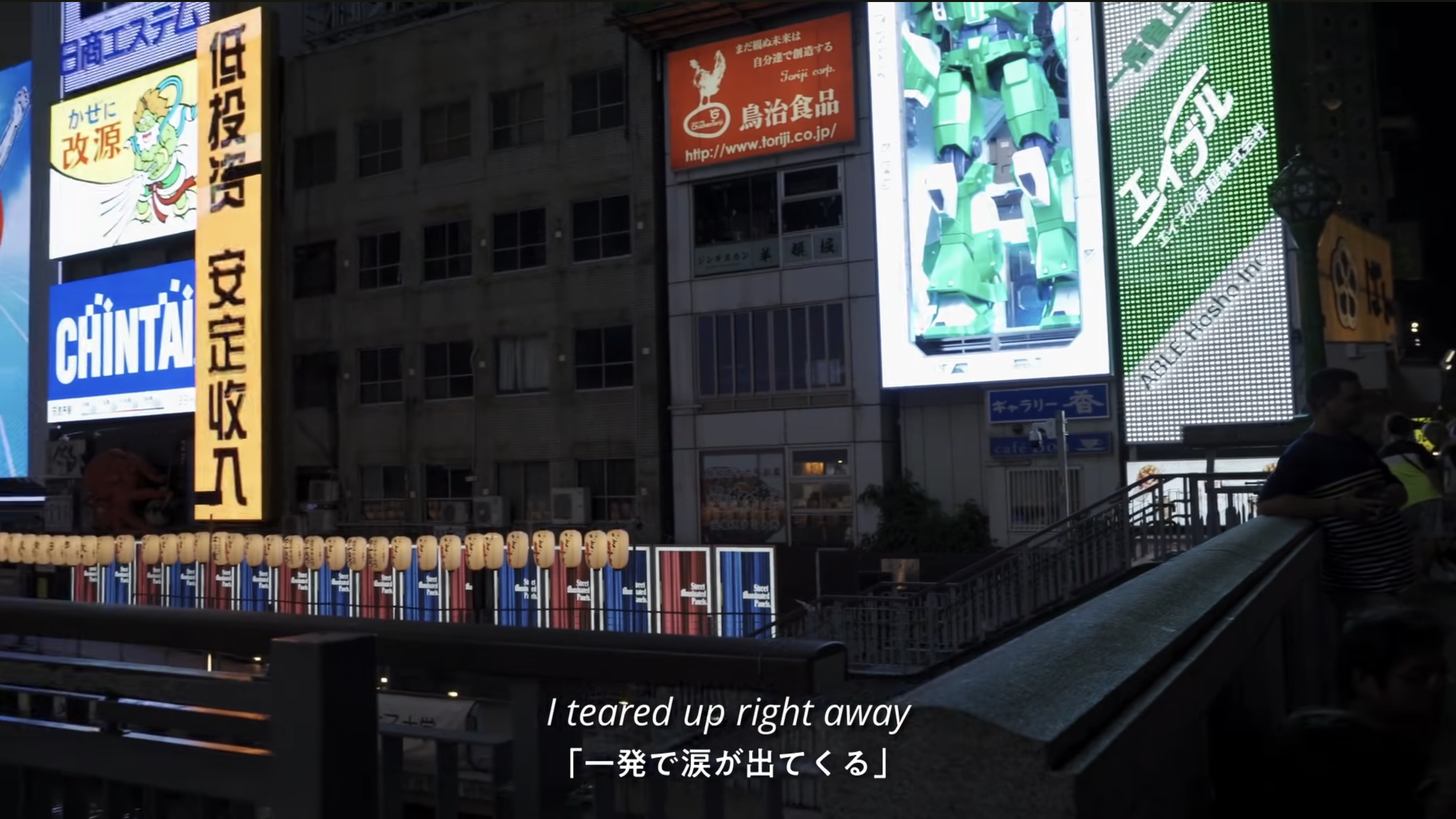
Sometimes, after their rhythms have been stuck in my head for a while, I find myself walking through the city and hearing the neon lights, all kinds of blinking lights and other everyday rhythms as if they were goat’s rhythms. One of the fascinating things about their music is that, despite how unfamiliar and seemingly alien it sounds, it can transform the way you perceive the city, making you realize that these rhythms have actually been all around us in our everyday lives.
I don’t think anyone has quite reached the same point as they have in this regard. I think Hino, who not only creates this music but also produces and nurtures it, will increasingly establish himself as an unmistakable presence in the music world. However, I don’t necessarily see his influence on Osaka, or his becoming a symbolic figure of the city in the same way as Boredoms or KK Manga, as the same thing. Rather, I think the respect for him within the music scene will continue to grow precisely because he remains so singular and unconventional, while being someone whose approach and music could hardly be replicated by anyone else.
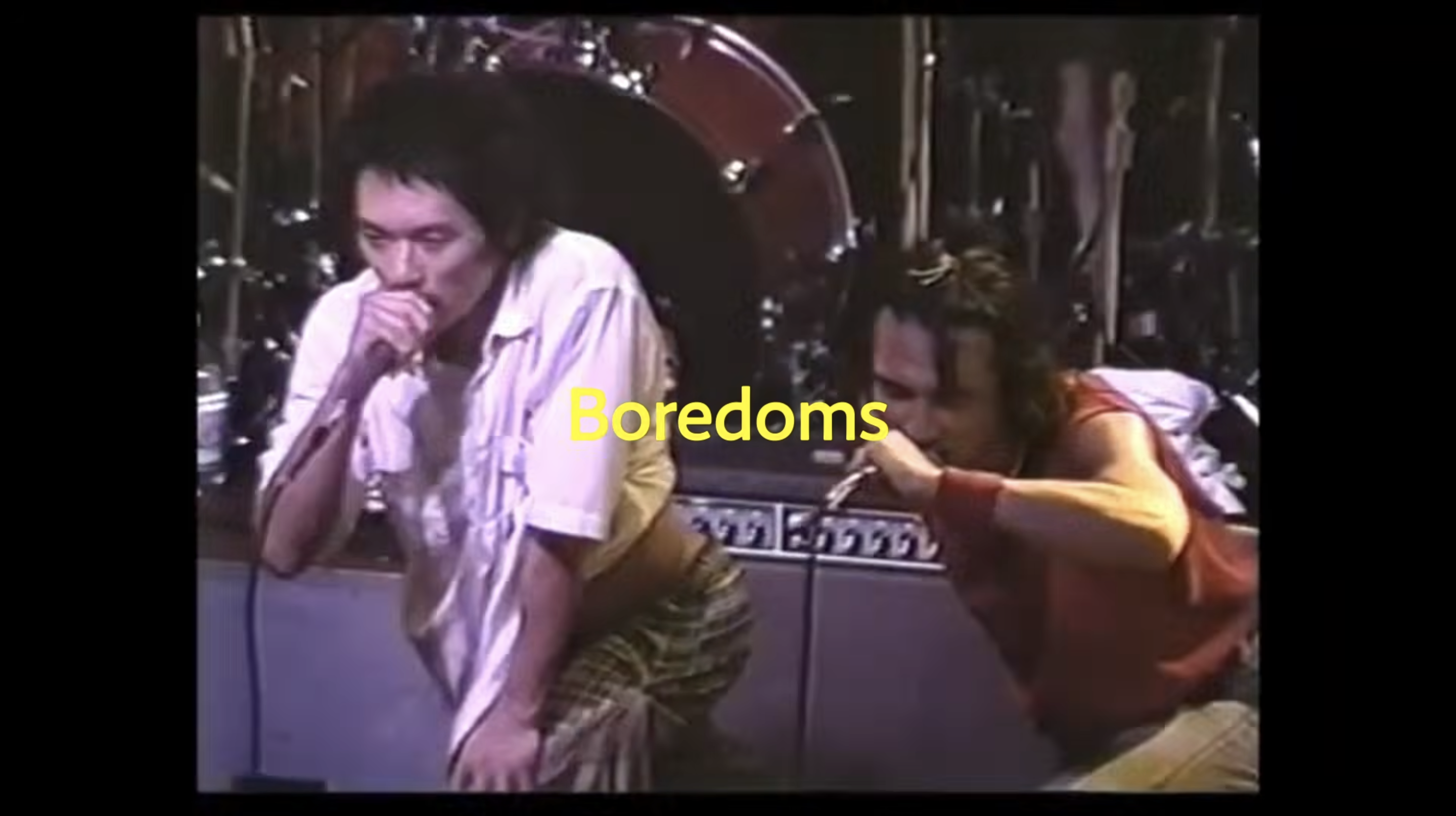
One thing that stands out in the film is that this current scene around OTO Building is very much a continuation of Osaka’s countercultural legacy, with the Boredoms’ being depicted as a predecessor of sorts. How tangible is this subversive legacy still in the film?
REI
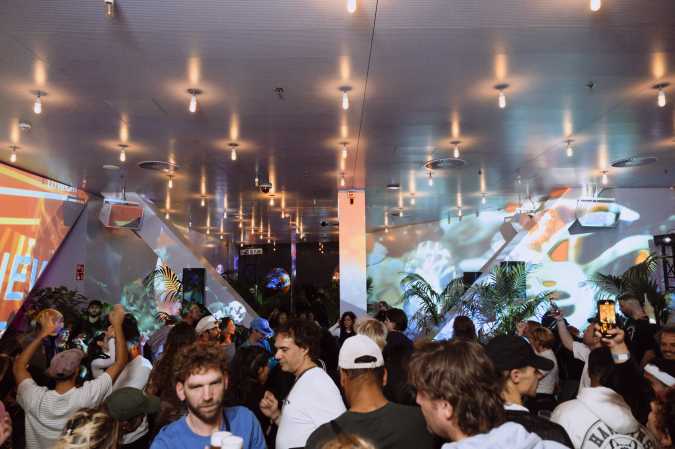
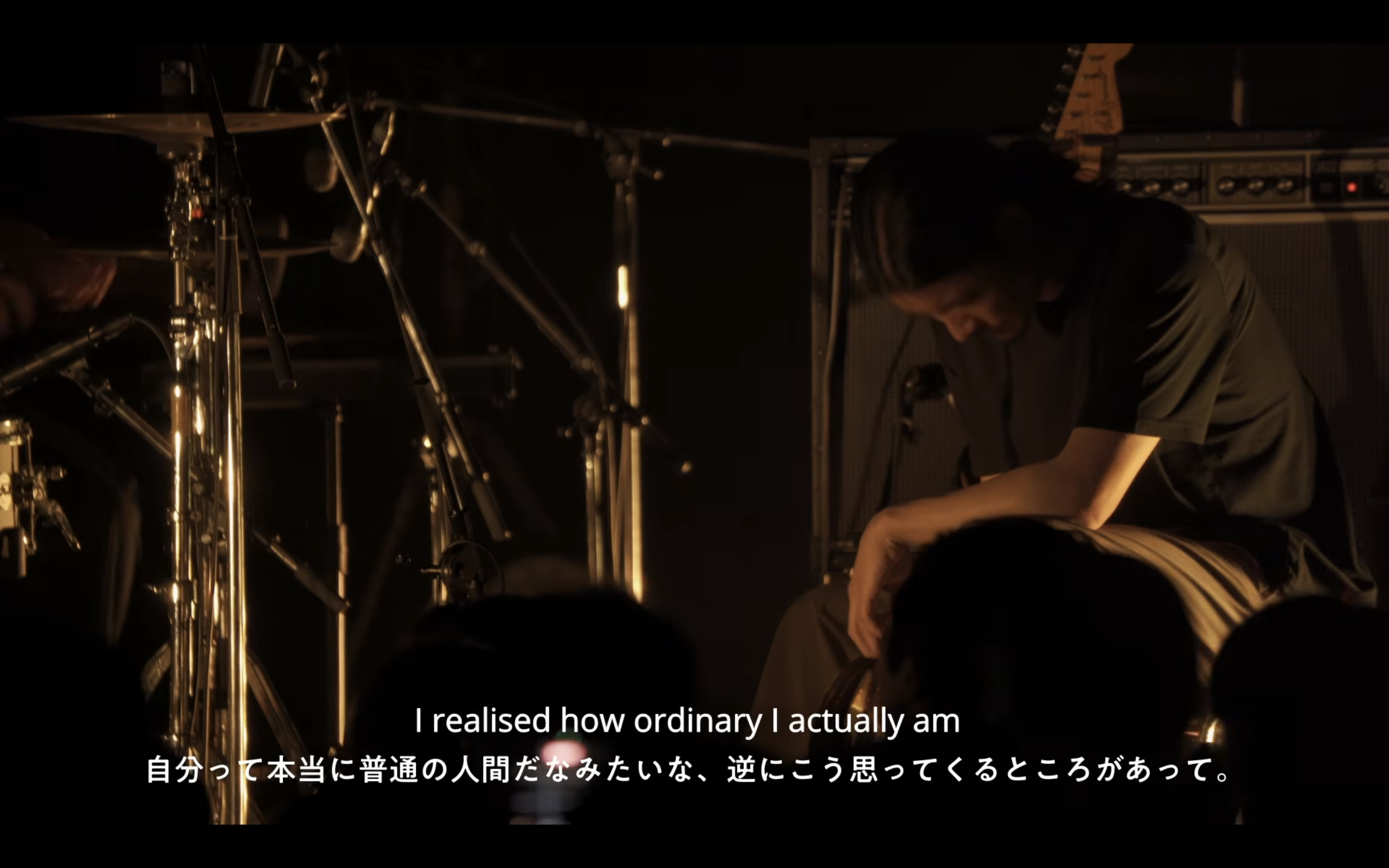
Namba Bears, which recently closed, is one example of this. Its owner, Seiichi Yamamoto, was a member of Boredoms, and I think the influences and spirit he carried from that time gradually became embodied in Bears itself as a venue. Bears was also a place where new scenes in Osaka’s music culture continued to emerge. KK Manga, who was also involved in running Bears while making music, is a band that I think carries the spirit of Boredoms in a very direct way. OTO Building also has an interesting structure, with Daphnia on the ground floor and Hino’s studio upstairs. I think it is precisely because Daphnia understands and embraces the music Hino and the others make that such interesting parties can take place there. This was also something that came up during the interviews.
YUSUKE
As you can see in the film, there are still many bands, musicians, and record shops that were part of that scene or were influenced by it, and they continue to play important roles in Osaka’s music culture. I think you could experience this legacy more directly at events held at places like Namba Bears, which closed at the end of July 2026, and Club Daphnia.
I feel that this environment naturally contributes to the development of Osaka’s own distinctive and original culture.
When you’re not strolling through Osaka, capturing the experimental music scene – what other projects are you currently working on?
REI
I work with photography as well as film, and at the moment, I’m experimenting with a new approach to image-making that explores the idea of darkness. It’s a method of photographic expression that I haven’t tried before in my own practice, and I’d be happy if I could share the work with people at some point in the future.
In terms of film, I’m also assisting an 80-year-old filmmaker who has been documenting Okinawa in Japan for over 60 years, and I’m currently shooting for his upcoming film.
I’m also planning a collaboration between my own work and a major music artist next year. I enjoy experimenting, so I want to keep challenging myself and trying new things.
YUSUKE
I mostly work on MODE, which was founded in 2018 by Chris Vaughan, who runs the label 33-33. I met Chris through Japanese sound artist FUJI|||||||||||TA while he was exploring the possibility of bringing MODE to Tokyo. This led to us launching the Tokyo edition together in 2023, with me joining as co-director.
We invite artists from Europe, Africa, the Americas, and Asia to present their work, and we also develop new commissions initiated by MODE.
In spring 2027, we’re planning to bring MODE back to London for the first time since 2019, with a programme that strongly reflects the relationships we’ve developed through our Tokyo editions.