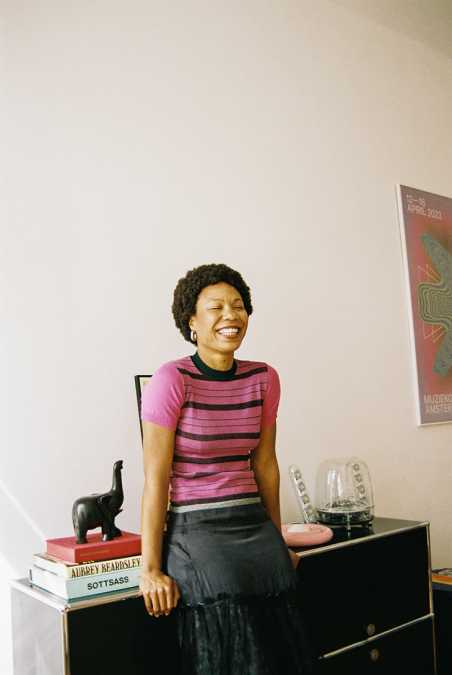
Margaret Munchheimer is an artist and writer who has contributed to multiple projects for LGW over the years. She has written the introduction to the program guide since 2014, which has historically served as a source for subsequent festival taglines, such as a celebration of sound, listening is the way forward, representing the underrepresented, together in sound.
Her work has contributed significantly to establishing a brand tone of voice, as well as text used for funding applications, press releases and public statements. She produced the first LGW podcast, The Big Playback, wrote the script for Pink Oculus’ moderation of the 2020 ON/OFF edition, and most recently, has collaborated as a speechwriting editor and public speaking coach.
For the occasion of our 20th anniversary, we’re highlighting collaborators whose work makes what we do visible, audible and legible to the rest of the world year after year. Behind the Scenes is a series of one-on-one talks with people who have been involved with the festival for quite some time. Their contribution extends beyond one show or one edition, they are essential to sharing what we’ve created here, and we are thrilled to have the chance to celebrate them and the years of appreciation between us.
Interview by Margaret Munchheimer
Photography by Nuno Conceição
While she conducted the previous interviews in this Behind the Scenes series, Margaret herself was scheduled to be interviewed as well, and we faced the odd proposition of how to approach that. Rather than solicit an additional interviewer, she chose to reflect on her own LGW experiences through the lens of some key points shared by her fellow interview subjects, as a kind of loose "Editors Note" to close. Beyond a few questions we offered to help organize the piece, what follows is Margaret in her own words.
What does “behind the scenes” look like for you, when the festival has become part of your life, rather than just your work?
How can I explain my relationship to LGW?
It’s taken so many forms over the years, but remains a daily presence in my life, and I imagine, always will. The fact that it’s also an intensely personal relationship allows me to maintain the time and interest to stay so involved. But also, because I deeply believe in it.
This year will be my fifteenth edition, having first participated in 2012 as a concert DJ between the bands at EKKO. Even then, it was like no festival I had been to before, and with a life long populated by musicians and people in music, I’d been to many.
I met [founder] Bob van Heur that summer at a festival in Hamburg, where we both were meeting up with the same band. A friend and I were picking up some gear from them and bringing it back to Berlin (where I lived at the time); Bob was driving them on to their next show. We had many friends in common, so I’d heard of Bob, and also Le Guess Who?, but never really considered going. After all, why would I leave Berlin to go to Utrecht, wherever that was?
Back then, I was still DJing for money quite a bit, but I was tired of it; mostly of the friction I encountered when I wanted to introduce hiphop into the sets at the main venue I was playing, and quickly discovered they had a no hiphop policy. They thought the crowds it drew caused fights, which sounds pretty baffling now, but I swear it’s true. Anyway, I found it a shame, because at the time festivals were still heavily genre focused—and a single genre at that—so that made it a pretty monotone experience. I also found it strange that so many people I knew to be fans of guitar-based music were hiphop fans as well, but it was rarely played in the same places. I felt that having a dance floor experience from the DJs in between the bands would help break up some of the monotony; kind of like a palette cleanser. Pretty simple really, but at the time it wasn’t being done anywhere that I knew of. I told all this to Bob and he just said, "Why don’t you come try it at my festival?"
Too easy.
In 2012 Tivoli Oudegracht was still one of the main halls of LGW where the shows were taking place, and the placement on that canal made for a truly unforgettable experience. Constantly zooming back and forth between the various venues (occasionally in the biting cold), eventually you’d recognize the way by a cute little brown cafe or a particularly nice window or flower box, and have the feeling you actually knew the place a bit. It was a very sweet kind of intimacy that I think made everyone feel at home, despite the exhilaration of keeping to a concert agenda that looked like the diagram of a football play. It was endearing and captivating and I quickly understood why so many friends had recommended it.
Another thing that struck me was how LOUD the venue allowed me to play. After years of volume limitors in Berlin bars, I was taken aback when the sound crew at EKKO kept telling me to turn it up—and even more so that the sound was so good in the venue that it could withstand it. It didn’t distort, it just got better. In fact, at no point at LGW did I experience the sound being anything other than excellent.
I also saw immediately that the disregard for single-genre programming was already something Bob was implementing. At the time, he said his working premise was that even if you stayed in one venue all night (something no one did) you could still have an unforgettable night out from the variety of artists you’d end up seeing in that one spot. Like a mini-program per venue.
It’s still there if you look closely, only the relationship to genre has evolved a bit, to respect the importance of context. Years of ‘mixing things up’ made it clear that in addition to variety, people also need recognition—whether in form or in spirit.
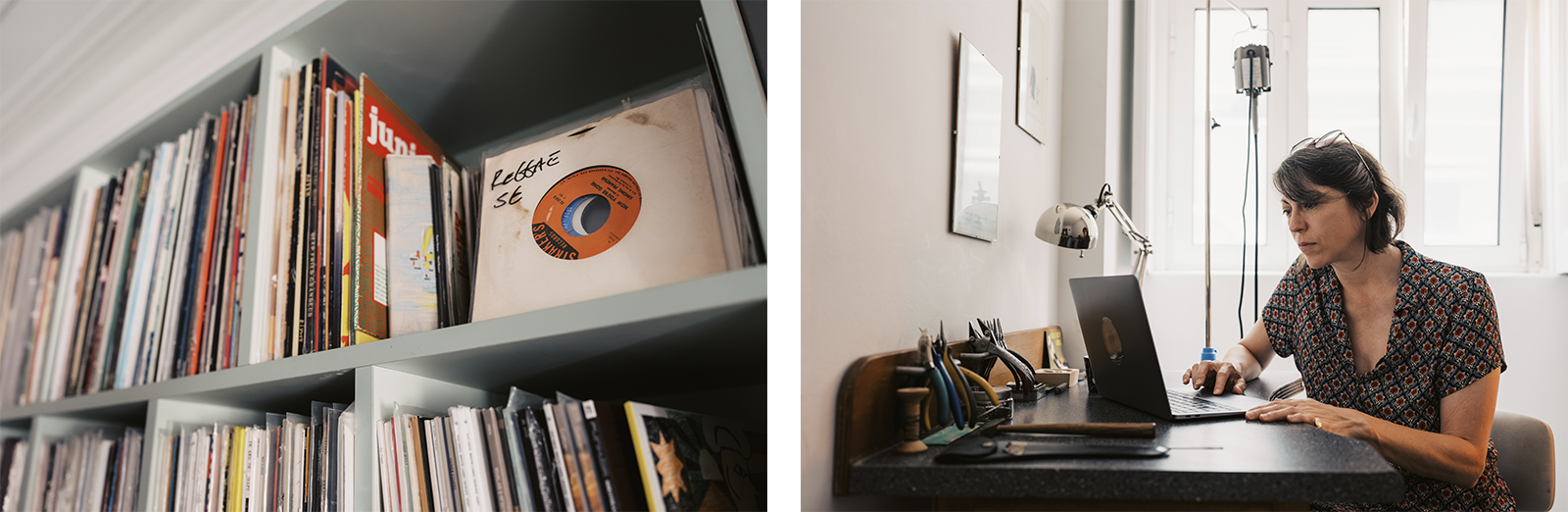
This is a delicate balance that’s been cultivated at LGW for some time, whether directly or indirectly, and I suspect, one of the most compelling aspects of the festival for many people.
Photographers Melanie and Juri mentioned this in their interview and I have to agree—you encounter people you may or may not have a thing in common with, but already you’re at LGW together, and that’s a start.
You've experienced LGW from many different perspectives: as a copywriter, interviewer, podcast maker, audience member and someone who has been close to the festival since its early years. How do these different roles influence the way you see the festival?
Until pretty recently the festival produced a printed program guide each year. Opening this was the Voorwoord (foreword), which was basically a note from Johan & Bob [LGW founders], that went into some highlights in that year’s program and special thanks to people they wanted to acknowledge. It was even signed with their two names like a letter; brief and straightforward, but warm and personal.
At some point, Bob asked me to help with the foreword, and we wrote it together. That was the first of many, and though it quickly became a tradition for me to write that piece, the first few were still signed ‘Johan & Bob’. That personal approach seemed right for the event at the time–half the lineup and much of the audience were people they knew, and the team was a handful of people who were also like family. Then again, the first one I wrote literally closed with something like ‘Killer Vibes’, so maybe it’s for the best.
By the ninth edition we began developing a kind of interview technique where Bob and I would discuss all the things he’d been thinking that year with the programming, the ideas and inspirations he’d had, and I would ask questions, zoom in or out to sharpen the focus, and try out different words and phrases to see what resonated. Then I would write the piece from those notes, and we’d edit it together.
That process developed totally organically, and it’s one we still use. And here I’d like to clarify some things that people may or may not realize: For artists and people working in creative fields, it is not uncommon to end up in a relationship with someone who does the same kind of work or something similar. So for many creative partnerships, the significant other becomes your artistic sounding board.
However, as I have long observed, the creative process of artistic inquiry that is continuously at work in LGW is not common. The act of questioning and digging, which has always been at the heart of the project, is likely why they are able to engage and collaborate so well with artists, something that is now their trademark. And why they are willing to offer the kind of freedom to experiment that so many of the others in this interview series spoke about.
And this is something I am always trying to shine a light on, because it really is special.
Looking back on working with LGW for so many years, is there a project (or a moment) that still stands out to you?
Before the pandemic, I’d been mentioning that I thought LGW should do a podcast. Around 2016 I’d found I couldn’t engage with news anymore unless it was longform, and something I could take my time with. Besides being a writer, I’m also trained as a jeweler, and on the days I was working at the bench, I took to listening to podcasts to engage my mind while working with my hands, and try to work through the things happening in the world. This is still part of how I balance my practice today.
But I loved the format and eventually pitched the idea to Jasper Willems, then copywriter for LGW, who I always had really deep conversations with. I thought the two of us would be a great team, and we had many ideas for how to approach it, though neither of us had ever done one. Eventually we were told, ‘Ok, come up with an idea and let’s see it.’
In the meantime, Jasper was on the verge of releasing a book, which I was also editing, so by the time we got around to the pilot episode, the lockdowns had started.
That said, the pilot episode of the podcast—which was about tour managers, an essential and under-championed part of the touring process—consisted of several fascinating interviews which even now I consider to be imminently relevant material for the time, almost prescient in their subject matter, but did not get produced. The recording quality was garbage, and for the marketing department it simply didn't pass the test.
The first episode, Is Music A Religion?, was considerably better, and the basic format for the project was born. Every episode posed a question (because the LGW logo) and in fact had its own dedicated artwork per episode (like an album cover), each by a different illustrator. That’s something you see a lot now, but at the time, Apple podcasts didn’t even have that functionality so the amazing artwork we commissioned wasn’t even showing up for half those listeners.
For example, when it came to the ON/OFF project, things were happening so quickly I don’t think anyone had realized the moderator would need a script, until I offered to do it. Also that came out well, I thought, but again there was no guarantee it would work. Here is where the faith in the process really pays off.
Every worthwhile project begins with a question or an observation, and the urge to try something and see where it leads. It cannot be controlled, only guided and supported, documented and reflected upon. As most of those phases of the process produce no immediate (saleable) results, they are not typically pursued by most organizations. But only a genuine search can produce something ground-breaking. Without this, everything else is just an approximation of something that’s come before. And this is something they have a lot of respect for at LGW. But yes, as I have found out, there is also quality control.
You've been responsible for phrases that have become part of LGW's identity. How do words contribute to the identity of the festival and to building a community around it?
What I continue to see in LGW as an organization is the parallel with a design studio: rather than a typical venue/festival/music event. Ultimately, it’s about a grand central vision which is then shared and disseminated, reconceptualized amongst a team, and then focused into the mission of the organization itself.
For my part, I can say that over the years my role has been about finding the words to crystallize that vision; to tell and re-tell it in more effective ways until it can be seen and shared by as many people as possible. Interestingly, this is just as often for internal use as for the ticket-buying public at large. After all, the work itself is of many people and in order to work toward the same goal, you have to collectively understand what that goal is. So that requires a lot of communication. And a final word about that, being from Limburg, and having grown up speaking a separate dialect, Bob is not technically a native Dutch speaker. He’s often said that English is much easier for him to express himself. I believe this process of switching languages not only strengthened international connections (particularly as the team grew to include more nationalities and backgrounds), but also allowed him to find words for his vision.
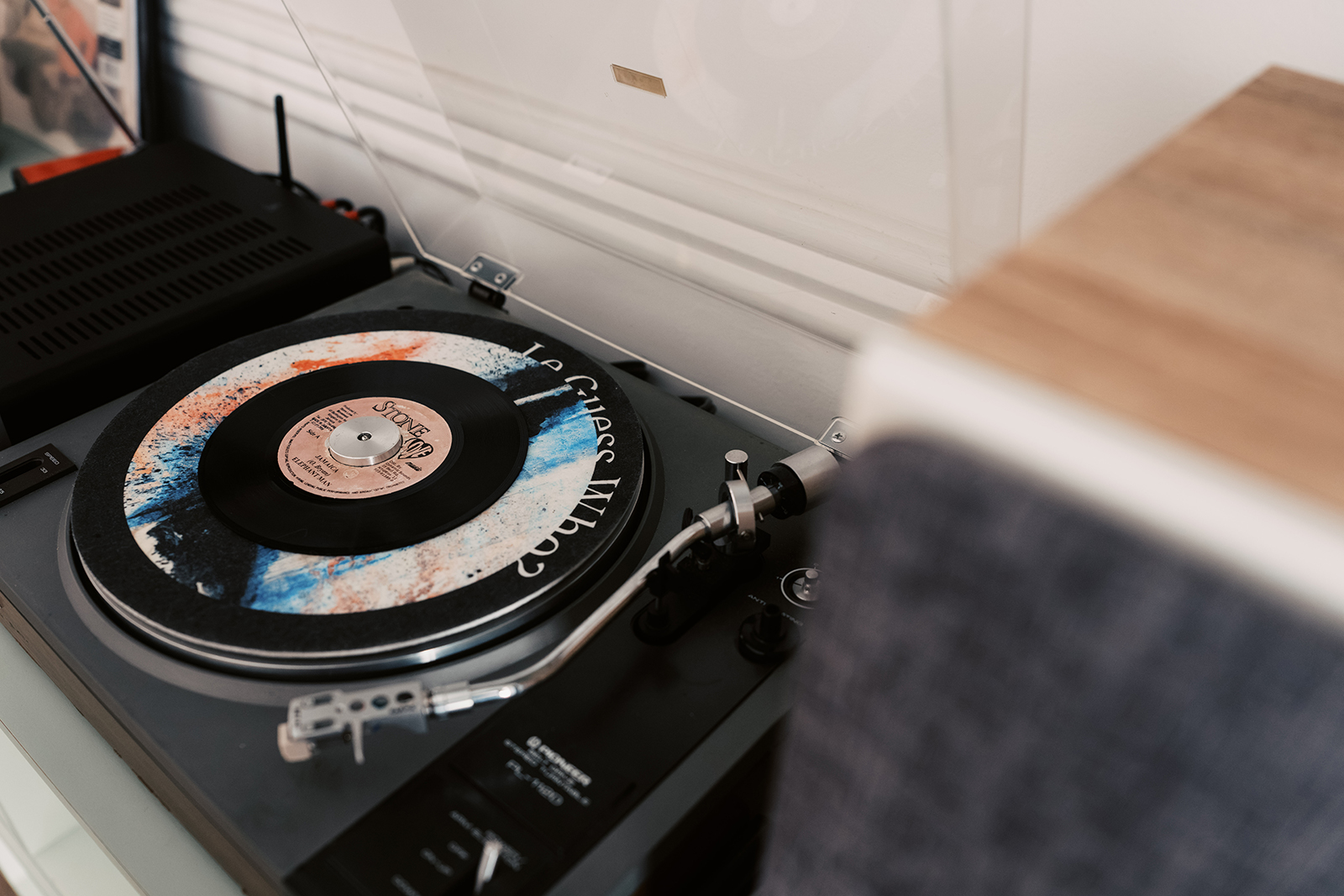
The audience, I suspect, are drawn by the programming, which speaks for itself, and says exactly what it is and why it is, far better than words. I doubt most who attend the festival keep track of the text they’re reading, and to be honest, for me that’s ok. From a technical perspective, I tend to think that good copy shouldn’t announce itself, it should just land right, and it should sound true. And if it’s coming from a place of authenticity it probably will.
Fortunately, I’ve never had to worry about that with LGW, because it always has been true, and though they prefer to let the work speak for itself, they’ve also never been afraid of telling the truth, or of being sincere. That’s a gift, and one I’ve felt very fortunate to be able to explore in developing a tone of voice that values sincerity and connection.
Another example though, is the letters that go out to the artists and crew, which are posted in the Tivoli backstage. The first year this was implemented, it was the source of so much gratitude, because it really made the people involved feel seen and appreciated. It was something which had always been true, but which made a huge difference when spoken out. In those moments, I really feel the power the right words can have, and am so proud to be a part of that gesture.
Sometimes the internal conversations align so strongly with the interests of others, whether it’s artists or other colleagues in the cultural sector, that the messaging feels necessary to share publicly, as in the visa statement we shared in 2024.
Beyond which, it appeared to stimulate further conversation within Dutch ministries, many of whom reached out to LGW afterward to try and work together on the issue. And that, I must confess, I would never have expected. But I was extremely proud of that piece and found it really inspiring to see what words can do at the right time and in the right context.
Having the 20th anniversary as a catalyst for reflection, and conducting this interview series has opened so many lovely conversations with others who’ve helped shape this process, and I was struck by the similarities in the things they shared—with each other, but also compared to my own experiences. I found it interesting that we hadn’t all compared notes in this way before. But the fact that we were all experiencing it separately from our own corners of the project…well for me that makes it sound true. The trust, the freedom to experiment and the collaborative approach, the constant development of new ideas and innovation of process as a result—it really is how they work, and it really is working. It’s beautiful.
What would you like to see, or see more of, in the future?
One thing I’m really happy to see is the recent development of a talks program, Le Guess Who?'s Sound & Culture Summit. I have great hope for the potential of accessing the immense knowledge and creativity of the LGW community—the artists who join each year, and the audience as well—and I love the idea of harnessing that energy into fostering greater connection.
During the festival, people are extremely open, and they are definitely thinking. Under no circumstances should we assume they all have the same ideas or opinions; just as musicians are not monolithic, and do not represent a single viewpoint. But exercising the ability to explore ideas and thoughts together in a way that is generative and does not require everyone to agree, is already a service with tremendous potential for good. I’m very curious to see what comes out of that.
The other thing I would like to see is both more LGW, and more LGW’s. Lately, I see a growing pressure on cultural organizations to be all things to all people. This wasn’t always the case, and as a premise it is, respectfully, absurd. Doing one thing well is a blessing; doing it for 20 years despite dramatic world changes is nearly a miracle. Pressure to expand, or just become something else, is the best way to kill something good. So first and foremost, I would like to see LGW continue to be LGW.
But the other side of that coin is: WE NEED MORE LGW’s! But different. Which can try different things, or serve different objectives, or just occupy different space than this one does. In my view, a greater number of participants in the cultural ecosystem reduces the pressure on all of them to be everything to everyone. So if you like LGW but don’t see everything there you’re looking for, start a new one! But remember: start small, because nothing is born fully-formed, and this one took 20 years of trial and error to build. Do one thing at a time and give yourself the freedom to experiment.
You have no idea where it may lead.
With special thanks to Zsarà Grünfeld, for additional editing and consultation on the Behind the Scenes series.