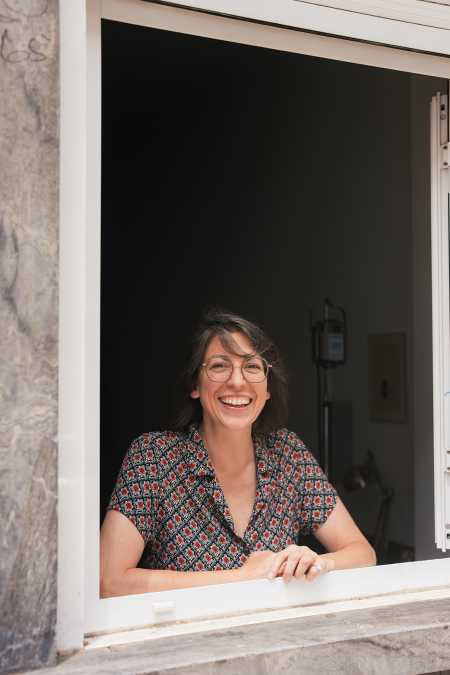
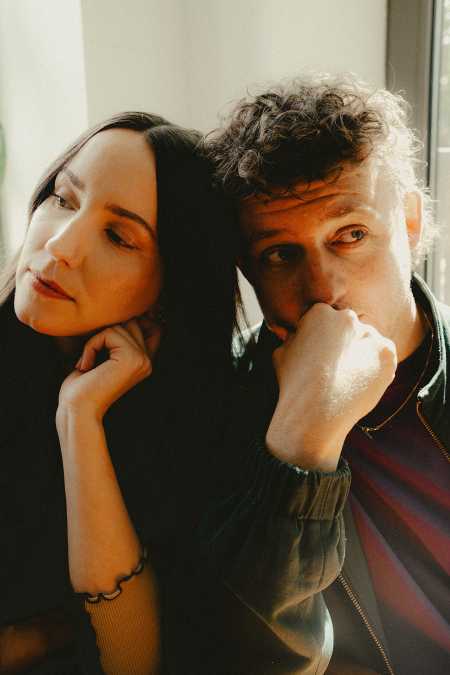
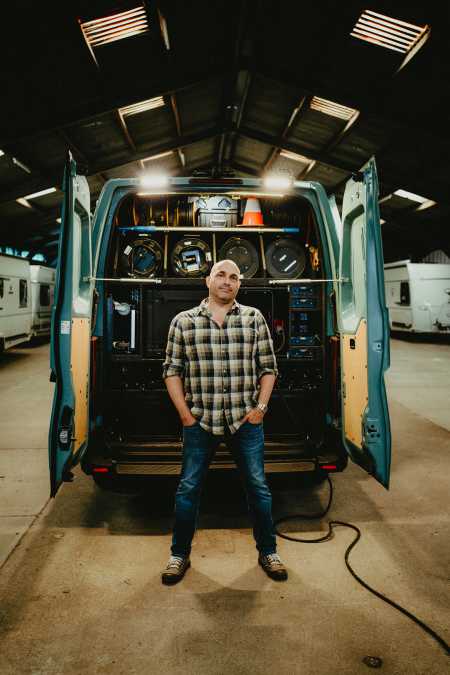
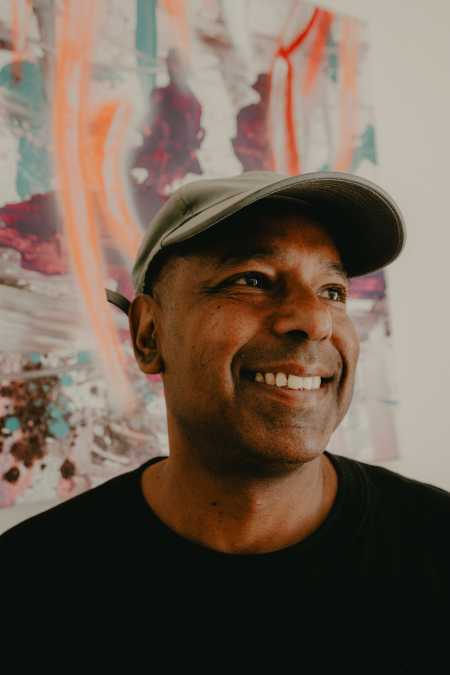
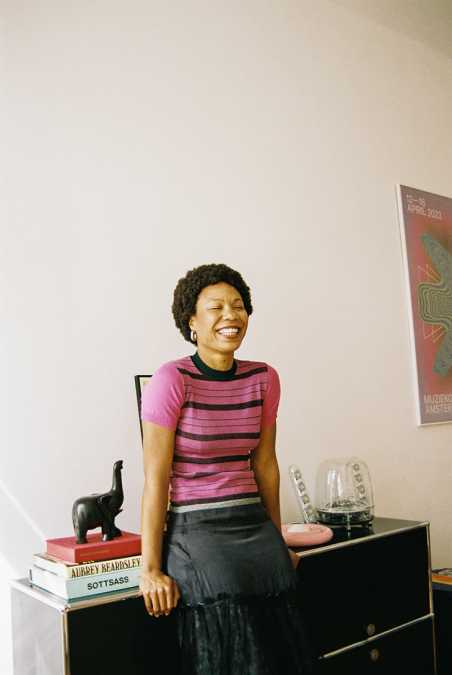
Filmmaker Dammes Kieft and his team have captured some of the most vivid documentation in circulation of Le Guess Who? moments in the making. Moving onstage, backstage and amongst the crowds for the duration of the festival, they produce live concert footage of at least a dozen shows, plus extensive social media coverage, and have done since 2021.
Yet, having grown up in Rotterdam with one parent in the theatre, and another the owner of a circus shop, Dammes has never been far from the stage or the artists’ perspective. Already at age 12 he entered the Filmklas at the Theaterhavo/vwo to pursue a career in film directly from graduation. Both a model of professionalism and a sunbeam of positivity, Dammes is an avid collaborator, who has, and continues to work with figures such as: Iris van Herpen and Tilda Swinton; light artists such as Boris Acket and musicians like Eefje de Visser and Mr. Scruff; EYE Film Museum and festivals, Motel Mozaique and Horst Arts & Music.
For the occasion of our 20th anniversary, we’re highlighting collaborators whose work makes what we do visible, audible and legible to the rest of the world year after year. Behind the Scenes is a series of one-on-one talks with people who have been involved with the festival for quite some time. Their contribution extends beyond one show or one edition, they are essential to sharing what we’ve created here, and we are thrilled to have the chance to celebrate them and the years of appreciation between us.
Interview by Margaret Munchheimer
Photography by Noah Schielen
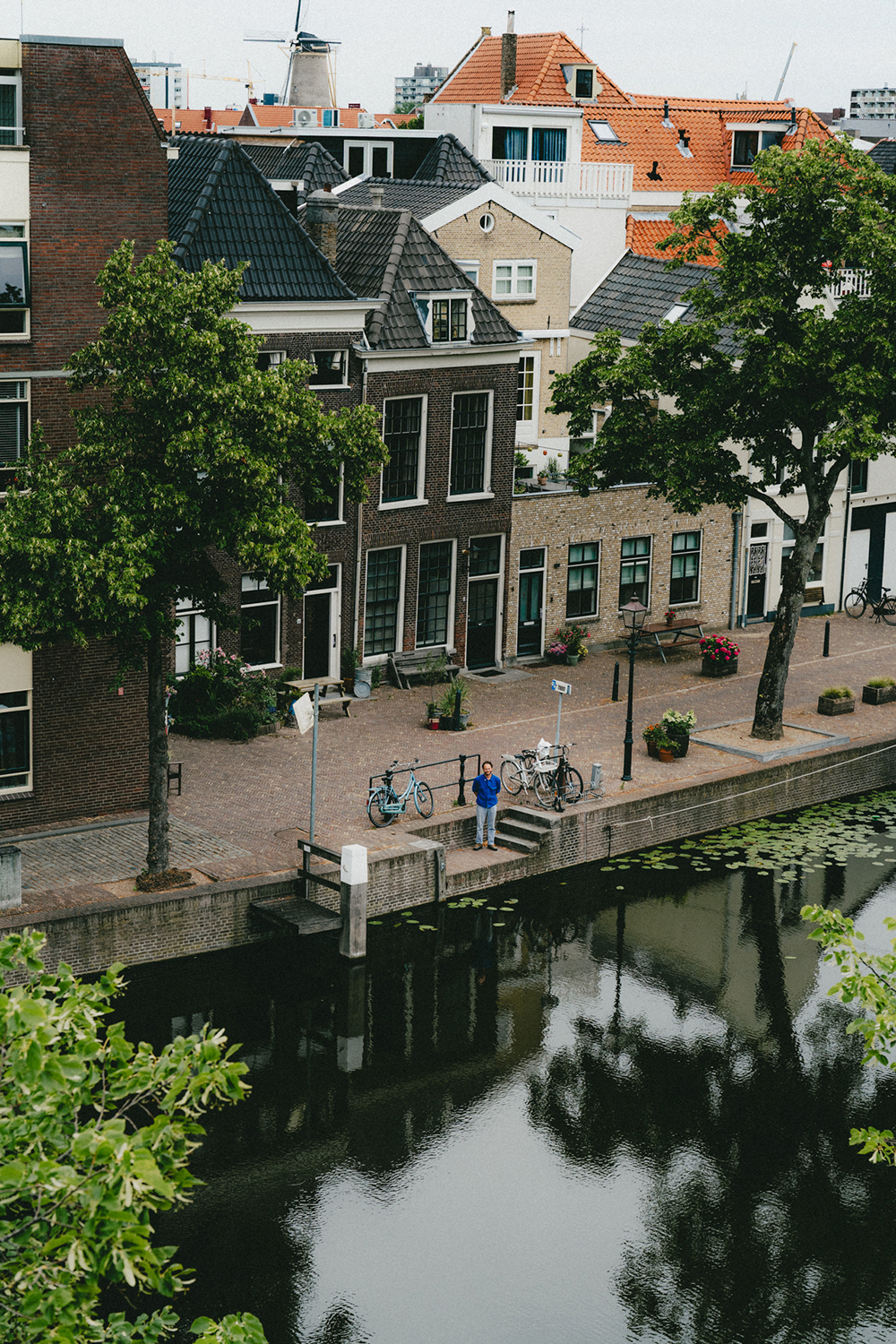
For our fifth Behind the Scenes interview, we speak with Dammes Kieft. He is beaming his usual smile, but from his brand new studio in the beautiful harbour of Delfshaven: CINE.RGY, a shared workspace and non-profit for collective and creative growth of filmmakers in Rotterdam. During our conversation, Dammes shares the impact LGW has had on his process, his philosophy on effective artist collaboration, and the powerful experience of having met most of his current crew (and now studio mates), on the job during their first year at the festival.
Let's start at the beginning. Why don't you tell me what kinds of work you do with Le Guess Who? and how you first began working with them.
I'm a filmmaker, mostly active within the cultural sector. I work within music, fashion and art environments; and everything on commission, so I don't make, say, fiction movies or that kind of stuff. I work closely with artists or cultural institutions, and have worked with LGW since 2021.
That was a very special year, the first year after COVID, so crowd-wise, artist-wise, crew-wise, everybody was really happy that we could be together again. That was something you could clearly feel within the crowd and during the recording.
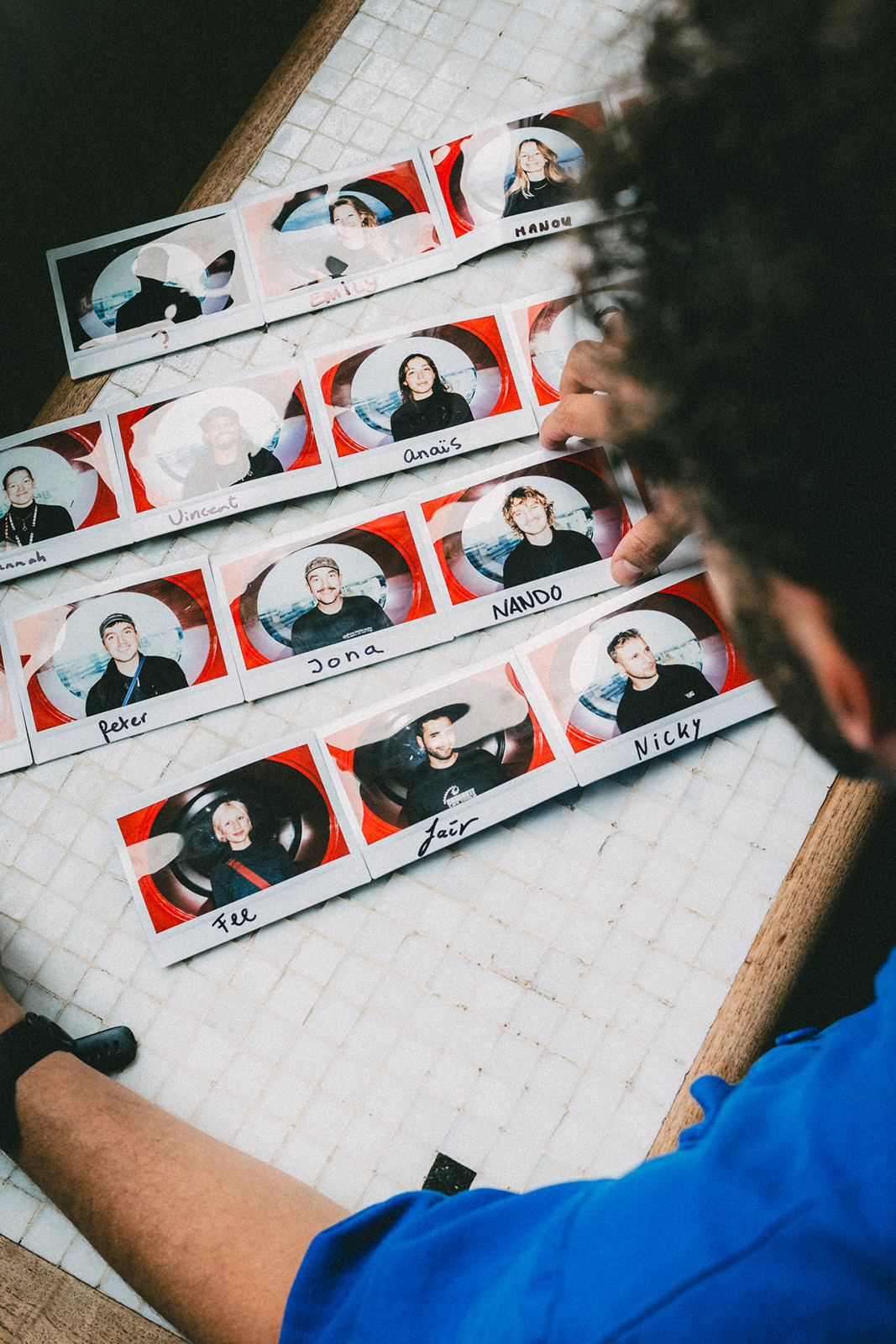
Also, at that point I had never worked with such a big crew on a music event, and it was very exciting to find the right fit for this specific festival. I was a bit nervous and didn't know if this group would work out together, because nobody knew each other before that. Each of us has a completely different personality, but somehow everybody matches together; there are no egos involved. We absolutely made the best of it—I mean, I'm sharing an office now, with five of those people.
At first I was asked to produce the concert registrations, and also produce all atmospheric and social content during and after the event. So we had two parallel teams, one providing all the concert films and one providing all the social content, which meant we also shot a lot of content apart from the concerts. We worked at a very fast pace: There’d be a show somewhere which we’d decided would be nice to record, and within an hour we had a video that could be published and shared with the world and also with the artist. And we had an editor on site, Peter Marcus, who actually worked around the clock to make this all possible.
During a festival we're shooting 12 to 13 concerts and releasing maybe 40 social media videos. So that's quite a lot. People might not know this, but it means we actually run from venue to venue—running from the RONDA in TivoliVredenburg to the Jacobikerk because there is a gap of, say, 20 minutes where we have to get there and prepare before the show starts... So I think quality wise, what I always say is that we're getting the maximum quality possible while being this flexible and mobile. Because it's also not that we choose one or two stages every year where we do all the recordings–no, it's everywhere–we're like a hybrid organism.
But that's a lot of fun, and being in that rush is crazy. We always feel like we're in a bubble during LGW.
So what does the typical day look like, this monster day of hybrid video?
Well, we start with a shot of ginger. Our fridge is filled, filled with ginger shots. It's a tradition now. It’s funny, because 90% of the crew sleeps in the same hostel, so we're literally in a bubble together; we always have the same headquarters, the same room number, even, which feels like a second home during that time. There are some colleagues calling this production a work-cation, which is kind of fun.
And yeah, the crew really enjoys it, and I myself really enjoy it... For most of us, you could call it the week of the year. Since ‘21, we've been there every year, and basically the crew only grew bigger; nobody left.
Is this way of working something that has informed your practice on other projects, or led to other working methods for you?
100%. I think LGW inspired me to start this new place I have right now. Somehow the synergy that grew within this team and how we got together…I always say that, of course, we strive for an extremely good end product, but to get to that, the process has to be even better. Everybody needs to feel strong, everybody needs to feel completely confident in their craft, in their specialty. And I think that's something we’ve created together, to get to this feeling. And yeah, somehow after every LGW, I have to cry a little.
Oh yeah. It can get pretty emotional. Just to that point, though, what are some of the things that you feel like you've learned in your experience working with the festival?
I think the most important thing is to stay open for the unexpected, even if everything is planned to be super tight and strict. Because a festival is a very hectic place, and it's uncontrollable. Actually, you don't know what to expect, literally. Not even if the crowd around you is going to be okay with your position [for filming], so it's very important to have and feel the openness, even though you are in the most hectic environment to work in.
So I think finding ease and peace within the chaos that a festival can be, is the most important thing. It’s what we learned, but also over the years, we’ve gotten better at this, I think.
Of course, there are ways to grow, maybe technically, or whatever, to become better, but that requires bigger equipment, bigger blah blah blah, and all those things are not possible if you still want to stay flexible.
Amazing. I wanted to go into the crowd a little bit, from your perspective, because you’re interacting inevitably with the people in the audience, obviously. What characterizes LGW for you, in the vibe of people there?
Well, I think, because the crowd at LGW is so dedicated in general, they also really know that the work we do is part of that. There're a lot of YouTube comments underneath all the LGW videos, which say, “Why didn't you film longer?”, ”Where's the whole set?”
People always want more. So, in general, they are also very respectful to us.
Of course, from time to time, somebody takes a certain position [in the front of the room] because they really love that act, and then we come and set up our cameras, and it's like, “Hello, sorry, we're right in front of you”. But then once they see the shot, most of the time they can actually watch with us, and then they're like, “This is actually quite nice. I can see much closer now.”
You feel that in the crowd, and in how the artists interact with the crowd, and it somehow makes it very intimate. It is a big festival, but somehow, I don't know, the crowd is just…it's a grown-up crowd, but without becoming too old. And super respectful.
Let's talk about the work that you’ve done. What are some of the highlights for you in terms of the work itself and the product that you get?
Apart from the team effort, I really like how the concert films we make are really made together with the artists. We usually get in touch with every artist that we ask to film, to see if there's any possibility to talk with them. From time to time you just feel they're busy with a tour, and there's no conversation possible. But when those conversations do happen, we get to create the most beautiful things, and I really feel my heart and my fire sparks there a lot.
For example with clipping. or Slauson Malone 1 or aja monet, in 2024, I had calls with them to discuss what they would like to see, and somehow with their input I could work really well, and we made something beautiful, where we both could feel 100% happy with it.
Like for example, with aja monet: when we spoke, she explained how she would like to see if filming could be a form of jazz on its own, whether the way you record could be a jazz dance by itself. I never thought about it this way, and it became such a beautiful movie. Or for example, with Slauson Malone 1, I remember he was telling me that he was super inspired by boredom, and so [the film] should be kind of boring. So I thought maybe we should just go for extreme close-ups and extreme totals, and that's it. And well, we ended up with a super slick and beautiful film, and a lot of people commented in the feed, ‘Hey, this cannot be live… This is a video clip’.
There are certain shots, I still can't comprehend when I see them–it doesn't feel live, but it is.
So would you say LGW has been a platform for experimentation for you, as well, in your work?
Yeah. And those moments are when it feels that we spark the most.
Last year, I decided to go a little further. It was the fifth edition we were doing, so I wanted to give some of the filmmakers from the concert crew a new spark as well. So I gave the stage as video director to other people; I gave them the opportunity to be the director of a certain show, and get in touch with the artist and see how to go about that. That gave a whole new dynamic; they had a totally different vision, and it gave a completely new focus to how we recorded, and how it unfolded. And I also got a certain assignment [from them] to film in a specific way, and that turned out incredibly well—it was one of the best shots I took of 2025.
So in that way, we really try to get better every year and not get the feeling that we fall back or whatever.
I think now the trust is there between LGW and us, and they actually really like the fact we try to get further than just a conventional [registration]. Of course, the job is huge. I mean, we film 12 concert films, and we cannot give them all this ‘extra sauce’. Every concert film is beautifully made, but with the few where we really go for it this way, they give us that trust, and we see online that often those films also work the best.
You know, I recently read a theory that you only really do something properly the first time you do it, and every time afterward is in some way a repetition of that—that it's the only time you're doing it, not properly, but authentically. So this element of trying something new is really important for maintaining a certain kind of presence.
Yeah, that's a good one. Exactly, that happened last year with getting other filmmakers to direct production.That made everybody sharp again, and I actually want to try to do this more.
It's a fine line, but I think what we strive for is that we create a film that is an end product on its own, rather than just being the observer of the concert. But of course it has to be in line with the music and the artist and their vision as well; we cannot overdo it, because then you ask yourself, “What's the craft in this movie, is it the people who made the movie, or is it the artist?” But if you can find that sweet spot, then I think, yeah, then you are there.
I would really love to see that also in different places, let's say, or different festivals where they do concert films, because I think you don't really see it the way we do it. It's a more personal approach, getting in touch with the artist, really finding small details with the crew for the specific act, rather than being very big and just finding a conventional but epic way to record [everything]. So there is no formula, and I think you really feel that, and that's also what you read in most of the comments. It's crazy sometimes the compliments we get on these movies. It's so beautiful and super nice to read.
Particularly the video of clipping, there was something so intense about that one!
Yeah, yeah, clipping. was the first one where we found the edge. The show was so sick, and really the way we graded it, the way we recorded it was such an extra level for us, just because the show itself was literally clipping.…
I don't really know anything about film, so could you share some technical remarks on that?
So, actually, “clipping” is a film term which means that things are overexposed. So I took that quite literally…I just felt it in the room, the space to experiment; I felt it in their music, like they would definitely allow this.
In film terms, with the film grading, we actually pushed it to the limits, where officially a film grader would be with their hands in their hair, saying “what the hell have you done?”
And basically what I've done with this film is pushed the gray to the limits, put the blacks to the lowest and the whites to the highest; made them really extreme and blown out, added a lot of grain, and it really made the concert actually feel like a movie somehow. It didn't feel digital anymore, and that's what everybody really loved.
From that moment I told Barry [Spooren, Head of Marketing & Communication], that we need to put more time and effort into grading—let's say I was busy for a week with grading just clipping. It was crazy how much time and effort it cost, but we're still so happy to do that, and you really see it. You really see it in how everybody reacts, and how clipping. absolutely loved it as well.
There was a Senegalese band [Ndox Electrique] who had never performed in Europe before, and we filmed their concert, and they had 300 followers on Instagram, or something, but then LGW decided to give them the stage and record this performance. You don't know how happy they were with this, and what it can bring artists as well, in terms of future bookings… A lot of our recordings after they get released, you see [the artist] the next year being booked everywhere on festivals in Europe, because LGW gives them this tijdsdocument, this memento. And without any sponsors, without any television–it's fully financed by LGW, and it's a super big gift for the music community and the bands, as well.
I also think LGW is the best place to record, because the crowd is just so respectful, but also goes wild when things get wild, you know? When this synergy happens between the crowd, artists and us, let's say… for me, it just works every time.
Do you have any other favorite LGW moments you want to share, that for you really encapsulate what it's like to be there?
Well, sometimes it's also very hard that there's just a selection that we see, and there's a big, big FOMO of the festival that we also feel. One show, though, which was really special to me, was the DARKSIDE show last year.
We never film a full show, just because more than half of the team has to work handheld. So there's no tripods involved, because we have to be so flexible. If we all need to work with tripods, it's going to be way too stiff to be able to record three concerts in a time frame of three hours, so we just film 20 to 30 minutes of a concert.
But I heard from the lineup of the previous year that DARKSIDE would be there, and I'm a huge fan. They are actually very careful with what they have recorded, so, actually, during their whole tour, there was no recording at all. But then Barry sent a few examples [of our work] from previous years to them, to ask if they were interested and they said we could do the full one hour and 20 minutes!
This is quite a bucket list thing for me, because I'm a huge fan from back in the early days, say 10 years. So, this was the absolute chance to do this. And we did it; we just decided to do one less concert that day because of the energy. But I think that was the ultimate LGW moment for me, and it's also been received very well.
You know, almost every artist we film is pretty much new for everybody [in the team], we don't really know the artist upfront. But after that, everybody is a huge fan, we buy their LP's and everything—aja monet, or Meshell Ndegeocello…that show was crazy beautiful. DARKSIDE was a different story, it was actually the first one where a dream of mine came true, filming this concert.
So the only thing which I would close with is that I'm very thankful that LGW gives this space for artists and for us as a team, because for us, it is really the nicest project of the year.
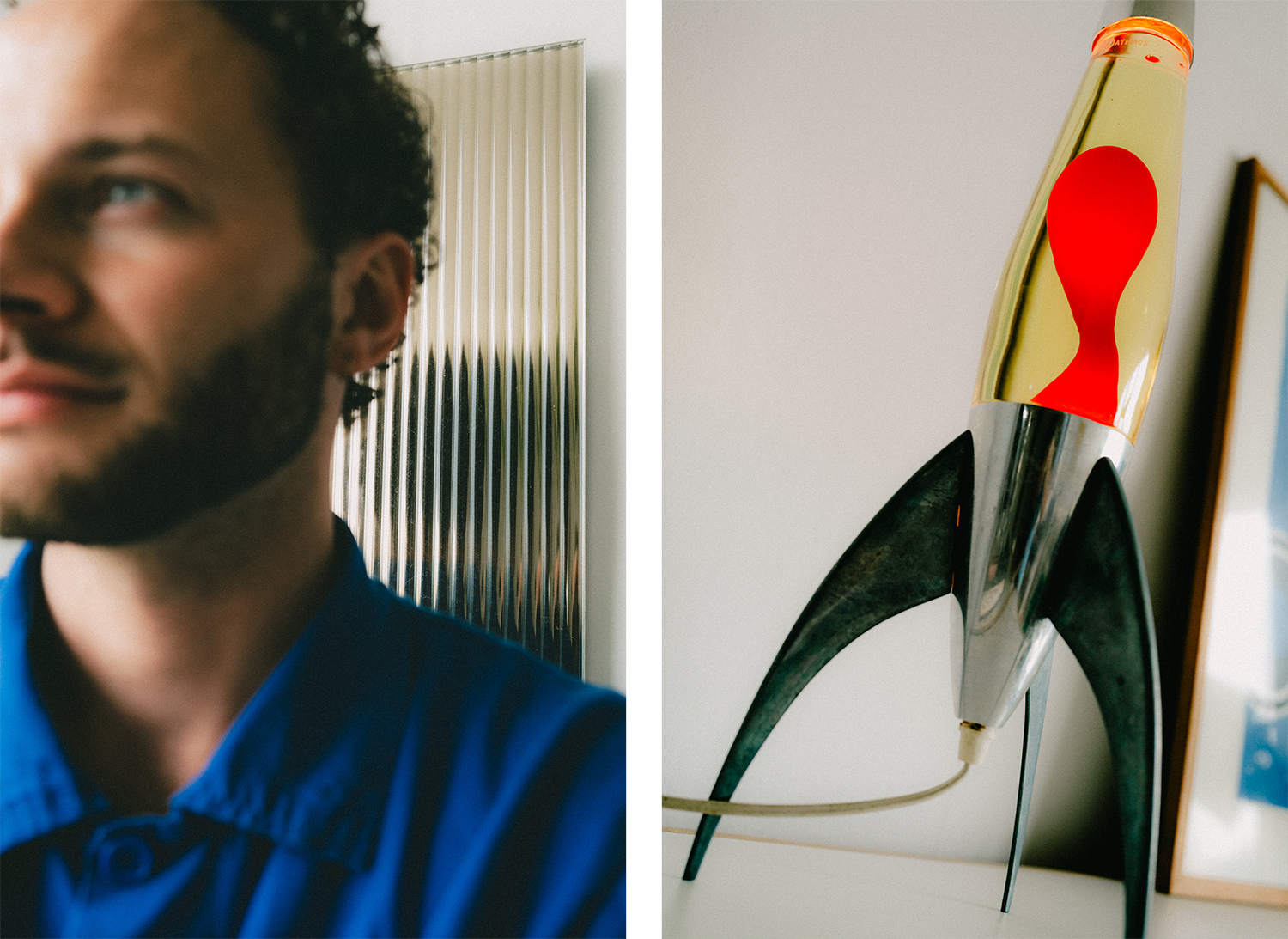
Dammes would like to acknowledge the following team and crew: Anaïs Saebu, Claudia Rison, Dean Fentross, Dennis Bravenboer, Emily Duurland, Hannah Zwaans, Jair van Harten, Joep van Weelden, Jonathan Sipkema, Manou Veldman, Nando Dullaart, Nicky Pajkić, Nico van den Berg, Peter Marcus, Ramon de Lima, Rikash Gobardhan, Thomas de Boer, Vincent Dankelman, Yuma Eekman. And his Lava Lamp.